



What Are Pilates Socks?
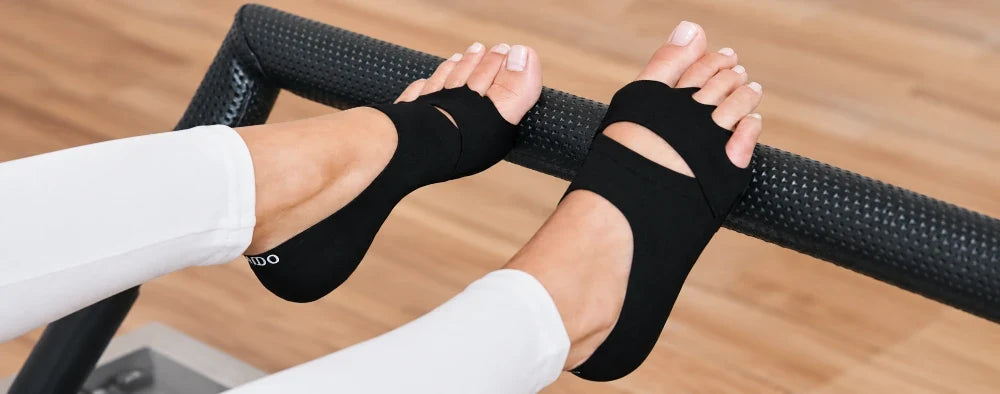
Pilates socks are grip socks with a non-slip sole designed to keep your feet steady on the mat and reformer, with toe designs that support balance and control. Styles range from open-toe to full-coverage and separated-toe options, each offering a slightly different feel during practice. Ahead, we’ll cover how Pilates socks work, why studios use them, how they differ from regular socks, and what to look for in a pair.
What Are Pilates Socks Used For?
Pilates socks are used for grip, stability, and foot control on the mat and reformer. They’re a simple way to feel steady and focused through slow, precise movements.
- Hold your position: Added traction keeps you grounded during planks, standing work, and reformer exercises.
- Move with control: Grip underfoot gives you a secure base as you step, press, stretch, or change positions.
- Support balance and alignment: Steady contact with the surface lets you stay centered during single-leg work and other balance-focused exercises.

How Pilates Socks Work
Two elements do most of the work: underfoot traction and a secure fit. The sole adds grip on mats and reformer equipment, creating steady contact throughout practice.
Internal retention reduces twisting, bunching, and shifting as you move. This keeps the grippy base properly aligned through each transition.
The Toe Designs on Pilates Socks
Toe design changes how your feet feel and connect with the surface during practice. Your usual class, preferred coverage, and comfort with separation can help narrow down the right option.
- Open-toe: Leaves the toes exposed for direct contact with the mat or reformer and allows natural toe splay. A good option for mat Pilates, barre, or balance-focused classes if you enjoy a barefoot feel and like sensing the surface beneath you.
- Full-toe: Covers the entire foot, much like a traditional sock. This works well in cool studios, if your feet tend to feel cold, or if you simply prefer full coverage.
- Five-toe or split-toe: Five-toe socks separate each toe, while split-toe versions isolate the big toe from the rest. Consider either style if you like more independent movement at the front of the foot and feel comfortable with divided pockets.
When trying on a pair, spread your toes, rise onto the balls of your feet, and shift your weight from side to side. A good fit should allow natural movement without pinching, pulling, or causing the sock to shift.
Why Pilates Studios Use Grip Socks
Pilates studios use grip socks mainly for traction and hygiene, and many include them in their class policies. If you’ve ever wondered, “What are Pilates socks, and why do studios ask for them?”, the answer comes down to how they support controlled movement and shared-space routines.
- Support traction and control: Grip underfoot creates friction with the mat or reformer, helping reduce unwanted sliding. With a stable point of contact, you can place your feet deliberately and adjust your position through each exercise.
- Create a barrier on shared equipment: Socks keep bare feet from coming into direct contact with studio surfaces used by multiple clients throughout the day.
- Follow class requirements: Grip socks are required in many Pilates classes, especially those using equipment. Policies vary, so check the guidelines before your first session.
These practical benefits explain why grip socks are common in Pilates studios.
How Pilates Socks Differ from Regular Socks
The key difference is purpose: one is built for studio movement, while the other is made primarily for everyday wear. Grip, retention, toe design, and how the sock behaves on smooth surfaces set the two apart.
|
Feature |
Pilates Socks |
Regular Socks |
|
Underfoot grip |
Adds traction through a grippy base |
Provides little added traction through a smooth underside |
|
Fit during movement |
Reduces twisting, bunching, and shifting through a secure fit |
Allows the fabric to move around the foot during studio exercises |
|
Toe options |
Comes in open-toe, full-toe, five-toe, and split-toe designs |
Usually covers all toes together |
|
Primary use |
Supports Pilates and studio-based movement |
Supports everyday wear inside footwear |
Material is another factor to consider. Organic cotton Pilates socks offer a soft, familiar feel, .but cotton alone won’t keep you from slipping on a studio floor. Our organic cotton socks guide explains what the material does and does not determine, while traction, fit, and construction shape how a pair performs in practice.
Choosing a Pair of Pilates Socks
Start with four things: grip, toe design, fit, and breathability. Look for enough traction for your usual class, choose the coverage that feels natural to you, and make sure the sock stays comfortably in place as you move. Breathable construction adds comfort through a full session. For sizing and care details, check the Yoga/Pilates/Barre Size & Care guide.
ONDO’s Studio Toe Grip Socks bring those priorities together for Pilates, yoga, and barre. The open-toe shape supports natural toe splay, while the 330D base creates grip without applied rubber dots. Internal silicone keeps the sock secure, and the design features Dual-Zone Construction. They’re also backed by our No Slip Guarantee®.

Explore the Studio Toe Grip collection for socks designed specifically for studio practice.a
FAQs on Pilates Socks
Why do you wear socks for Pilates?
Are open-toe or full-toe Pilates socks better?
Can I use Pilates socks for yoga and barre?
Do Pilates studios require grip socks?
Are Pilates socks different from regular grip socks?
Read more
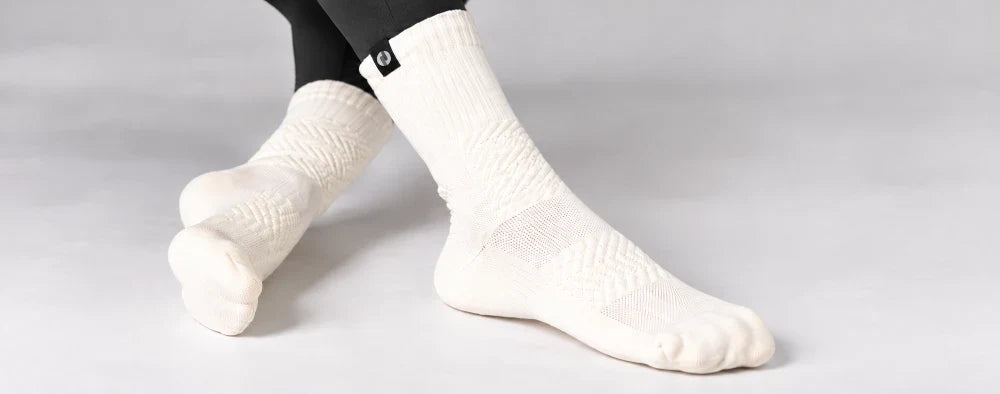
The best crew socks for leggings offer gentle support, a smooth profile, and breathable fabric without adding extra bulk around the leg. They should stay comfortably in place and work cleanly with ...
The best crew socks for leggings offer gentle support, a smooth profile, and breathable fabric without adding extra bulk around the leg. They should stay comfortably in place and work cleanly with ...