



Best Barre Socks with Grips for Studio and Home
The best barre socks with grips keep you anchored through balance work, precise movements, and controlled transitions without constant readjustment. Some traditional designs can lose effectiveness over time as grip dots wear or peel, elastic stretches out after repeated washing, or thicker fabric bunches underfoot.
The right pair comes down to how traction works, along with toe design, fit, breathability, and any studio requirements. This guide explains the difference between floor traction and sock retention, then covers the key features to consider for barre or Pilates.
Our Top Pick for Barre and Pilates
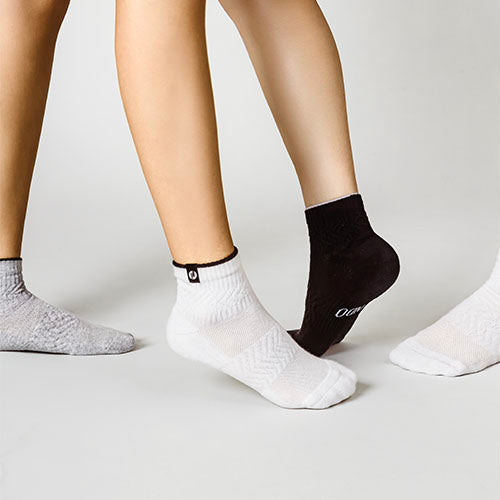
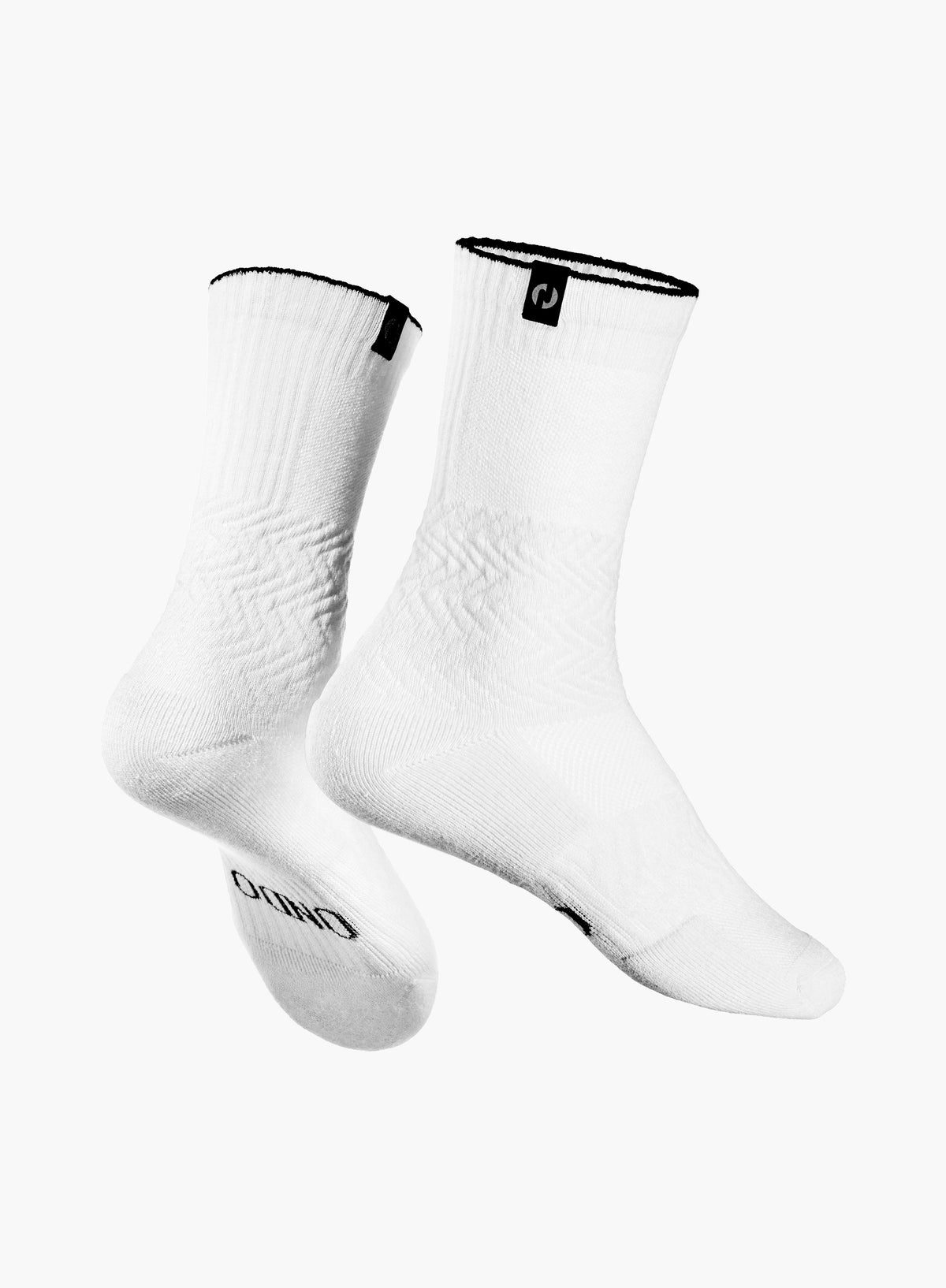
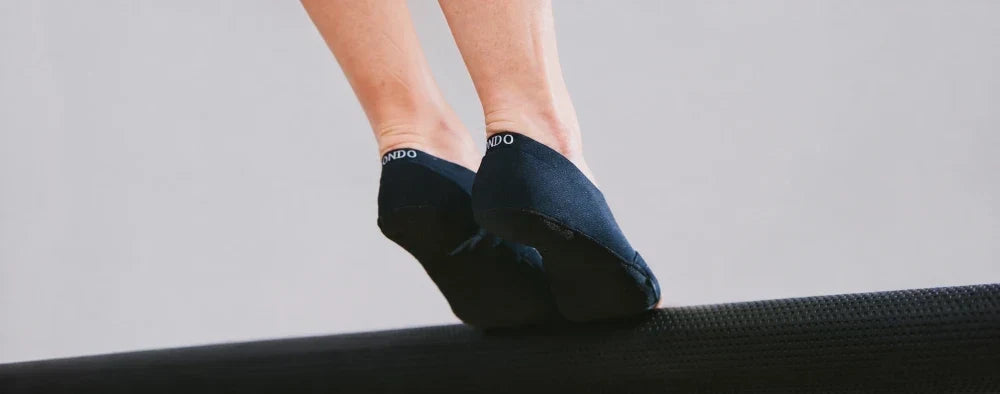
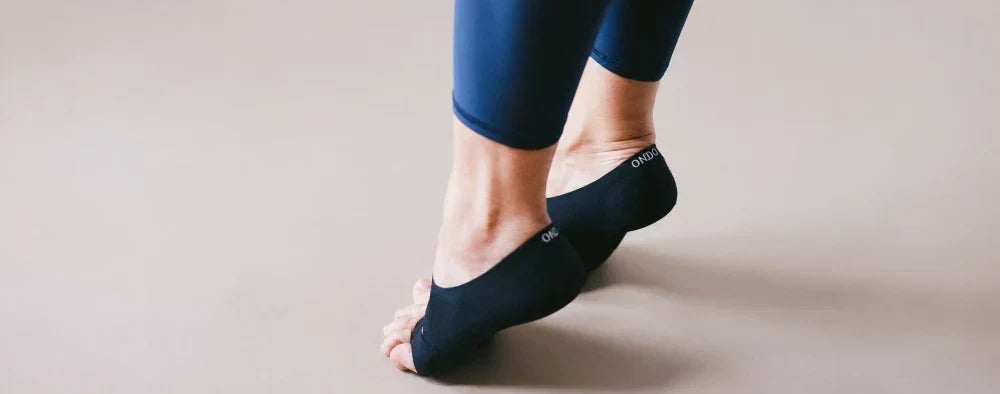
For barre and Pilates, the ONDO Studio Toe Grip Sock creates traction through direct floor contact, its resilient 330D base fabric, and natural toe splay. The open-toe design supports better balance and natural movement without relying on applied rubber dots, which can wear or peel in some traditional designs.
Patented internal silicone strips keep the sock secure through different positions, backed by the ONDO No Slip Guarantee®. Explore the ONDO Studio Toe Grip Sock, or read on to see which design and fit features matter most for your practice.

Why Barre and Pilates Need Grip Socks
Grip socks are a practical part of many barre and Pilates classes, where precise movement, studio policies, and different training surfaces all shape what works well on the foot. The right pair needs to suit both your practice and the setting where you wear it.
- Balance and control: Added traction can reduce unwanted sliding during holds, small movements, and controlled transitions.
- Studio requirements: Some studios require grip socks for hygiene or safety, so check before class, especially when choosing grip socks for Pure Barre or visiting a new Pilates studio.
- Different surfaces: Consider whether you will use them on studio flooring, mats, or reformer carriages, and choose a fit that stays comfortably in place as you move.
What Makes Barre Grip Socks Work
Good barre grip socks bring together traction, retention, toe design, and fit. Each element affects how securely the pair moves with your foot during practice.
- Lasting traction: Rubber or silicone dots are common, and durability depends on construction and care. Grip placement also affects traction, whether concentrated in key areas or spread across the sole. Some applied grips can wear, peel, or lose effectiveness over time.
- Toe design: Different sock styles provide different levels of coverage. Open-toe designs give direct floor contact and room for natural toe spread, while closed-toe options provide full coverage depending on the practice and preferred feel.
- Fit and breathability: A close, stretchy construction helps keep the traction area aligned underfoot. Breathable materials support comfort in warm or long sessions, and shape recovery and pill resistance suit regular wear.
The Best Barre Socks with Grips by Setting
The right design depends on where and how you practice. Different settings place the focus on different details, from lasting traction and secure retention in the studio to stability on the reformer and airflow for frequent use at home.
Best for Studio Barre and Pilates
For studio barre and Pilates, lasting traction and secure retention matter through balance work, holds, and controlled transitions on shared surfaces and equipment. A close fit also helps keep the sock aligned as foot positions change.
The ONDO Studio Toe Grip Sock fits those priorities with an open-toe structure for direct floor contact. Its resilient 330D base works with natural toe splay for lasting traction without relying on applied rubber dots, and patented internal silicone strips add secure retention, backed by the ONDO No Slip Guarantee®.

Best for Reformer Pilates
Reformer Pilates brings controlled pushing, sliding, and frequent changes in foot position. Look for steady traction and enough retention to limit twisting, bunching, or repeated adjustment as the carriage moves.
Here, the resilient 330D base supports stable contact, and ONDO’s patented internal silicone strips keep the sock secure on the foot through position changes. That retention reduces bunching and the need for readjustment during controlled movement.

Best for Home Workouts
At-home barre and Pilates sessions can move between hard floors, mats, and rugs, making versatile traction and everyday comfort useful across different setups. Breathability, shape recovery, and resistance to pilling also suit a pair worn regularly.
The sock’s Dual-Zone Construction leaves the instep open for airflow across the top of the foot. Its high-density performance fabric recovers after repeated stretching and resists pilling, helping the pair maintain its shape through regular wear.

Common Mistakes When Choosing Barre Grip Socks
A few simple checks can make a noticeable difference in how grip socks feel and perform through class. Pay attention to traction, fit, thickness, and any requirements set by your studio.
- Relying only on applied grip dots: Some wear, peel, or lose effectiveness over time.
- Choosing a bulky pair: Thick fabric can bunch underfoot and get in the way of controlled movement.
- Overlooking retention: Sole grip works best when the sock also stays settled on the foot.
- Skipping studio requirements: Check the rules before your first class, especially for barre or reformer Pilates.
- Holding on to worn pairs: Replace them once traction fades or the sock starts shifting during movement.
Find the Right Barre Socks with Grips
Choose barre socks with grips around your practice, with attention to traction, retention, toe design, fit, and breathability. These details shape how secure and comfortable the pair feels through class.
The ONDO Studio Toe Grip Sock brings those elements together in a studio-focused design. Explore its features to find the right match for your routine.
FAQs
Do I need grip socks for barre?
Are grip socks required for Pilates studios?
Are dots or fabric grip better on barre socks?
Can I wear barre grip socks for reformer Pilates?
How do I keep grip socks from sliding during class?
Read more
The best no slip yoga socks maintain steady mat contact, support balance through poses, and stay in place without constant readjustment. Sweat can make bare feet slippery, and some traditional desi...
The best no slip yoga socks maintain steady mat contact, support balance through poses, and stay in place without constant readjustment. Sweat can make bare feet slippery, and some traditional desi...