


Best No-Slip Yoga Socks for Grip and Stability
The best no slip yoga socks maintain steady mat contact, support balance through poses, and stay in place without constant readjustment. Sweat can make bare feet slippery, and some traditional designs lose effectiveness as silicone dots peel, cotton and elastic wear out with repeated washing, or thick fabric bunches underfoot and reduces direct contact with the mat.
Grip is only one part of the choice. Toe design, fit, breathability, and hygiene in shared studios also matter, so this guide first looks at how yoga socks create traction before comparing designs for different types of practice.
What Makes a Yoga Sock Actually No-Slip?
A secure yoga sock needs traction against the mat and retention around the foot. These two points of contact solve different problems and work together through changing poses.
- Mat traction: Look for a resilient, high-density base that maintains stable contact with the surface. Grip may come from the base fabric and natural toe splay rather than applied rubber dots, which sometimes wear, peel, or lose effectiveness over time.
- Internal retention: Mat grip does not stop the sock itself from shifting around the foot. Internal silicone secures the sock on the foot through different positions, limiting twisting, bunching, and mid-pose readjustment.
- Sweat management: Moisture on the sole and foot can reduce grip during practice. Breathable, moisture-wicking materials manage buildup and support traction through longer or heated sessions.
- Two points of contact: Sock-to-mat traction keeps contact with the surface, and sock-to-foot retention keeps the material settled around the foot. A design that addresses both reduces sliding and repeated readjustment.

Full-Toe vs Open-Toe (Toe-Grip) Designs
Toe construction changes how much coverage you get and how directly the toes meet the mat. The choice depends on the balance of coverage, surface contact, and toe freedom your practice calls for.
- Full-toe socks: Enclose the toes for a warm, covered feel. They can suit cooler studios, general floor work, or practices where full coverage is preferred.
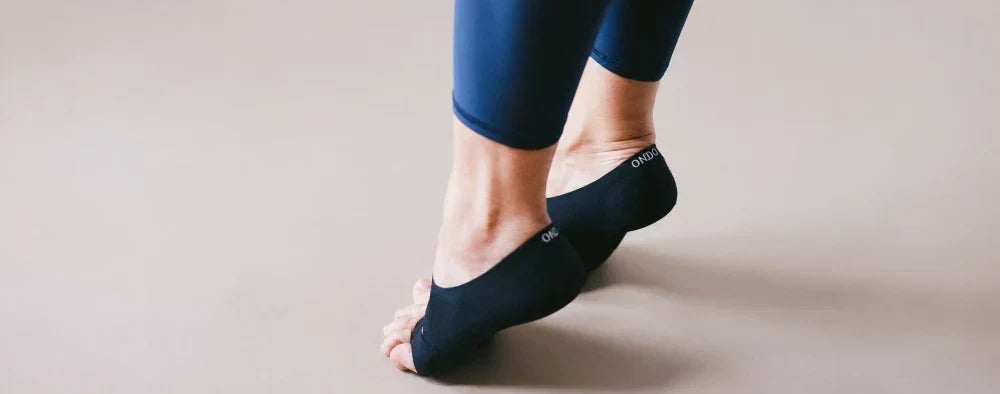
- Open-toe socks: Leave the toes exposed for direct mat contact and natural splay that contributes to grip. This construction suits balance-focused work and practices where feeling the surface through the toes matters.
Flexing, pointing, and spreading all depend on enough freedom through the forefoot. Choose the design based on how much toe movement and mat contact your practice requires.
The Best No-Slip Yoga Socks by Practice
The best no-slip yoga socks depend on the demands of each practice. Balance-focused yoga needs stable mat contact with enough toe freedom. Pilates and barre depend on secure retention. Heated classes require breathability plus moisture management. Shared studios add hygiene and regular care to the decision.
Best for Balance-Focused Yoga and Flow
Standing poses and flowing transitions call for steady mat contact and enough toe freedom to respond to changes in weight or placement. Open-toe construction allows direct contact with the surface and leaves room for flexing, pointing, and spreading through balance work.
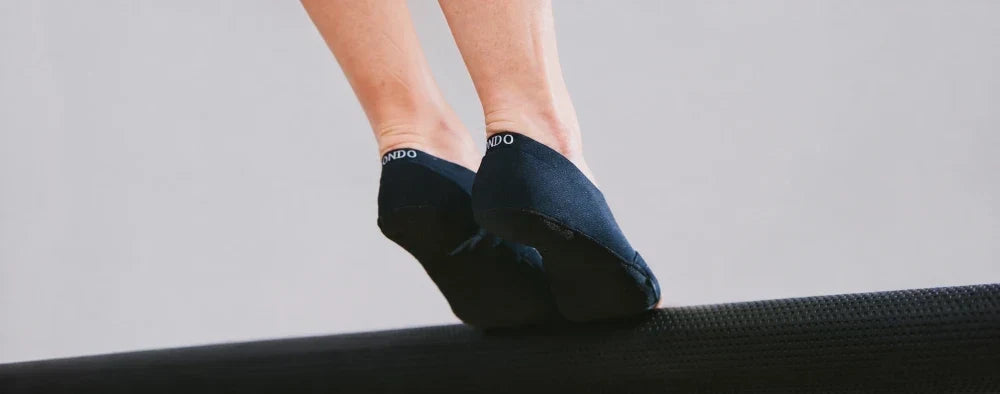
The ONDO Studio Toe Grip Sock combines that open-toe structure with a resilient 330D base that maintains stable contact with the mat. Grip comes from the base fabric and natural toe splay rather than applied rubber dots. Multi-way stretch allows the sock to move naturally with the foot.
Best for Pilates and Barre
Pilates and barre rely on precise foot placement across reformer, mat, and barre work. A secure fit keeps the sock from twisting or bunching as holds, transitions, and positions change.
ONDO’s patented internal silicone strips keep the sock secure in every position, limiting bunching, sliding, and repeated readjustment during movement. The No Slip Guarantee® backs that secure fit, the same No Slip technology used across ONDO socks.
Best for Hot and Heated Classes
Heat and sweat make airflow and moisture management important during heated practice. Look for breathable construction and moisture-wicking materials that manage buildup through the session.
The sock’s Dual-Zone Construction leaves the instep open to improve airflow across the top of the foot and help keep feet cool. Its multi-way-stretch performance fabric is moisture-wicking, shape-retaining, and pill-resistant for regular studio wear.
Best for Shared Studios and Hygiene
In shared studios, consider how much coverage you want, how often the socks will be washed, and any grip requirements set by the studio. Socks add a layer between covered areas of the foot and shared surfaces, though open-toe styles still leave the toes exposed for direct contact.
For regular studio use, follow the care instructions and choose materials that retain their shape over time. ONDO’s performance fabric recovers after repeated stretching and resists pilling, helping the sock maintain its shape through regular studio wear.
What Else to Look for: Fit, Movement, and Ease of Wear
Once traction is covered, look at how different sock styles follow the foot through movement and how easily they fit into your routine. Midfoot security, toe freedom, sizing, ease of wear, and regular care all affect how settled the pair feels through practice.
- Fit and movement: Look for a secure midfoot with enough room for the toes to flex, point, and spread naturally. A close, multi-way-stretch construction follows the foot and limits excess movement in the fabric.
- Ease of wear: The opening affects how easily the sock goes on and settles into position. Ergonomic angled openings make open-toe constructions easier to step into before class.
- Retention and sizing: Secure retention depends on both construction and fit. Follow the size guidance for the specific pair to avoid excess looseness or pressure around the foot.
- Regular care: Wash according to the care instructions and check traction and fit over time. Replace the pair once grip noticeably weakens or the sock starts shifting during movement.
- Shared-studio habits: Regular washing matters when socks are used around shared mats or equipment. Check the studio’s requirements for grip and coverage before class.
The ONDO Studio Toe Grip Sock applies this fit approach through Dual-Zone Construction that secures the foot while leaving the toes free to flex, point, and spread. Multi-way stretch follows the foot, and ergonomic angled openings make the sock easier to put on. The sock also carries the No Slip Guarantee®.

Common Mistakes When Choosing Yoga Socks
Small design details affect traction, toe movement, airflow, and how securely yoga socks stay in place. Check these features before settling on a pair.
- Relying only on applied rubber grip dots: They can wear, peel, or lose effectiveness over time.
- Choosing a bulky pair: Thick fabric can bunch underfoot and reduce direct contact with the mat.
- Ignoring toe design: Balance-focused practice benefits from enough toe freedom and direct surface contact.
- Overlooking airflow: Breathable, moisture-wicking materials matter as heat and sweat build through class.
- Holding on to worn pairs: Replace them once traction fades, fit loosens, or the sock starts shifting during movement.
Find the Right No-Slip Yoga Sock for Your Practice
Choose a design that matches how you practice, with the right balance of mat traction, internal retention, toe freedom, breathability, and fit. Together, these details affect how securely the sock stays in place through different poses and sessions.
The ONDO Studio Toe Grip Sock combines direct floor contact, natural toe movement, secure internal retention, and breathable construction in a studio-focused design. Explore more from ONDO or choose the Studio Toe Grip Sock for a fit designed around your practice.
FAQs
Do no slip yoga socks actually work?
Are open-toe or full-toe yoga socks better for grip?
Can I use grip socks for Pilates and barre?
Are grip socks good for hot yoga?
How do I keep grip socks from sliding during class?
Read more
The best barre socks with grips keep you anchored through balance work, precise movements, and controlled transitions without constant readjustment. Some traditional designs can lose effectiveness ...
The best barre socks with grips keep you anchored through balance work, precise movements, and controlled transitions without constant readjustment. Some traditional designs can lose effectiveness ...