



What Are Grip Socks for Pilates? A Simple Guide
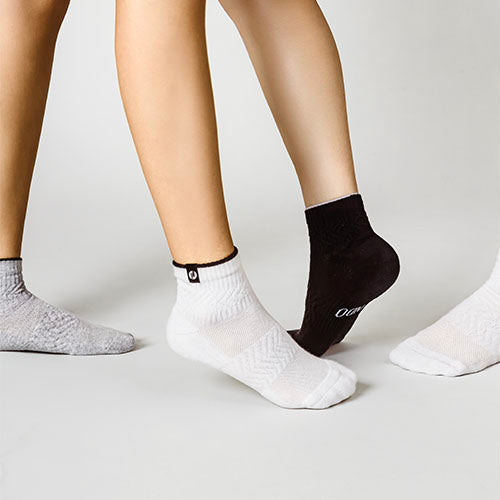
Grip socks for Pilates are socks with a grippy sole that adds traction on mats, reformers, and other studio equipment. They also limit direct skin contact with shared surfaces, which is one reason some studios require or recommend them during class.
A good pair should lie smoothly on the foot, with traction covering the main contact areas instead of shifting as you move. Check the overall fit, toe design, coverage underfoot, and care instructions to find a style that suits the way you practice Pilates.
How Grip Socks Work
Pilates grip socks use grip elements on the sole to increase traction against the reformer, mat, or floor. This added traction helps reduce unwanted sliding during controlled movement.
They also need to stay securely positioned on the foot. If the fit is too loose, the fabric can twist or bunch as you flex, point, or shift position, moving the gripping surface out of place.A secure heel fit, arch band, close-fitting construction, or straps can help keep the sock and its grip in place throughout the session.

Together, these two parts create the traction and retention grip sock needs to stay effective through controlled movement.
Why Pilates Studios Require Grip Socks
Some Pilates studios require or recommend grip socks as part of their class policy. The added traction helps reduce unwanted sliding during reformer work and transitions, helping your feet maintain more consistent contact with the equipment.
Hygiene is another common reason for these policies. Wearing grip socks keeps bare feet from directly touching shared mats, reformers, floors, and other studio surfaces used by different people throughout the day. Similar priorities also shape the choice of grip socks for barre and Pilates, where controlled foot placement and secure retention matter across studio equipment.
Toe vs No-Toe Grip Socks for Pilates
Toe style affects how much of the foot stays covered and how directly you feel the mat or equipment. The main choice is between leaving the toes exposed or keeping them fully enclosed.
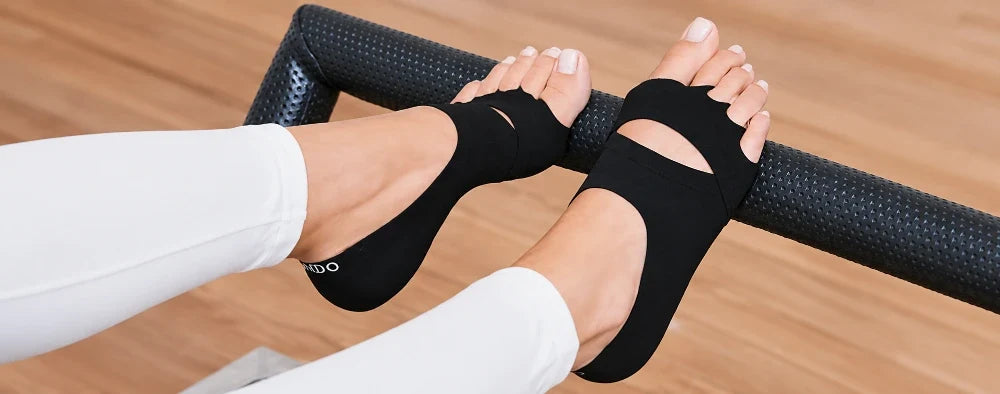
- Open-toe grip socks: With the toes exposed, this style gives you direct surface contact and lets the toes splay without fabric covering them. It can feel closer to practicing barefoot while still keeping grip under the rest of the foot.
- Closed or full-toe grip socks: This style covers the toes and feels more like a traditional sock. It suits anyone who wants extra coverage, especially on shared studio surfaces.
If you like having your toes uncovered during footwork or want a barefoot-style connection with the surface, open-toe may suit you better. If enclosed toes feel more comfortable, full-toe is likely the better fit for your practice.
How Grip Socks Differ from Regular Socks
Pilates grip socks differ from typical everyday socks mainly in their underfoot traction and secure fit during movement. Unlike ordinary pairs, Yoga/Pilates socks are designed around controlled studio movement and contact with reformers, mats, and other equipment.
|
Feature |
Typical Regular Socks |
Pilates Grip Socks |
|
Sole construction |
Fabric sole without dedicated grip |
Dedicated grip elements underfoot |
|
Traction |
Smooth fabric can slide on some surfaces |
Added friction helps reduce sliding on mats, reformers, and studio floors |
|
Fit and retention |
Varies by sock design |
May use a fitted heel, arch band, straps, or close construction to limit shifting and bunching |
|
Intended use |
General everyday wear or use inside shoes |
Pilates and similar studio activities |
During Pilates, those differences matter when the feet press against or change position on smooth equipment. Added traction helps maintain contact, while retention features keep the gripping area aligned underfoot.
Choosing Grip Socks for Pilates
The right pair should feel easy to move in from the start. Look for grip across the main contact areas underfoot, a secure fit that stays comfortable as you flex and point, breathable construction for longer sessions, and a toe style that feels natural for your practice. Check the size and care guide if you are between sizes or want the recommended care for studio socks.
ONDO Studio Toe Grip Socks offer an open-toe option with a resilient 330D base, leaving the toes free for direct surface contact and natural splay without relying on applied rubber grip dots. Internal silicone helps the sock stay in place, while the open construction and air-cooling fabric are designed with airflow in mind. They are also backed by our No Slip Guarantee® for sock retention while walking in shoes, subject to applicable terms.

If this style feels right for your practice, explore the ONDO Studio Toe Grip collection.
FAQs on Grip Socks for Pilates
Why do Pilates studios require grip socks?
Are toe or no-toe grip socks better for Pilates?
Can I use grip socks for yoga and barre too?
How are grip socks different from regular socks?
Read more
The best yoga socks for men provide added traction during balance-focused poses, a secure, properly sized fit, and enough breathability for warm, sweaty sessions. If you wear larger sizes, enough s...
Are compression socks good for long flights? Yes. Gentle graduated pressure supports circulation and can help reduce swelling while you sit for several hours, making them especially useful on fligh...