



Can You Wear Socks for Yoga?
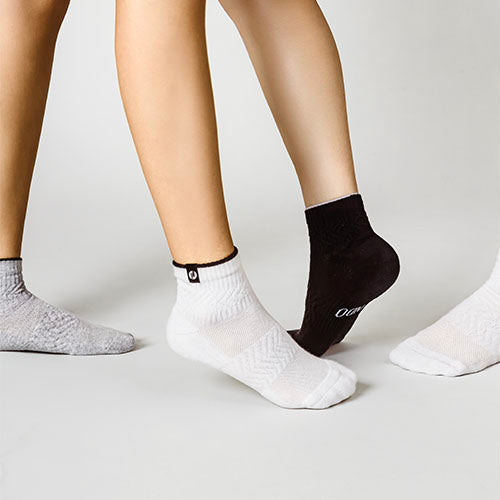
Can you wear socks for yoga? Yes. Grip socks are designed to add traction during studio movement, while regular socks can slide on the mat. The grip-focused design helps reduce slipping, limits direct contact with shared studio surfaces, and adds a little warmth in chilly rooms.
What feels right depends on where you practice and how you like your feet to feel as you move. Toe design, fit, and breathability all shape the experience. This guide walks through those choices, plus when going barefoot still makes sense.
Why Regular Socks Don't Work Well for Yoga
Regular socks often have smooth soles that lack traction on a yoga mat. As your weight shifts during standing poses, lunges, or transitions, the foot can slide instead of staying firmly planted.
That slipping can make it harder to hold your balance, maintain form, and move cleanly from one position to the next. Repeatedly readjusting your stance also breaks the rhythm of practice, which is why a grip-focused design works better when you prefer some coverage.
Why Grip Socks Work for Yoga
Grip socks work well for yoga because they add traction, provide coverage on shared surfaces, and bring light warmth in cool rooms. Each benefit supports a different part of practice.
- Traction: The base is designed to create friction against the mat, helping reduce sliding as your weight shifts through standing poses, lunges, or transitions. This is especially useful on slick surfaces where regular socks tend to move underfoot.
- Hygiene: In a studio, your feet often come into contact with shared mats or floors. Grip socks reduce direct skin contact with those surfaces, which suits anyone who prefers a little extra coverage in communal spaces.
- Warmth: Foot coverage can feel comfortable in air-conditioned studios or slower sessions where your body generates less heat. A breathable construction helps keep that coverage from feeling heavy or stuffy.

When choosing a pair, look for secure grip, a close fit, breathable materials, and enough flexibility for natural foot movement. If you want to go deeper into how traction and retention work, our guide to no slip yoga socks breaks down the key design details.
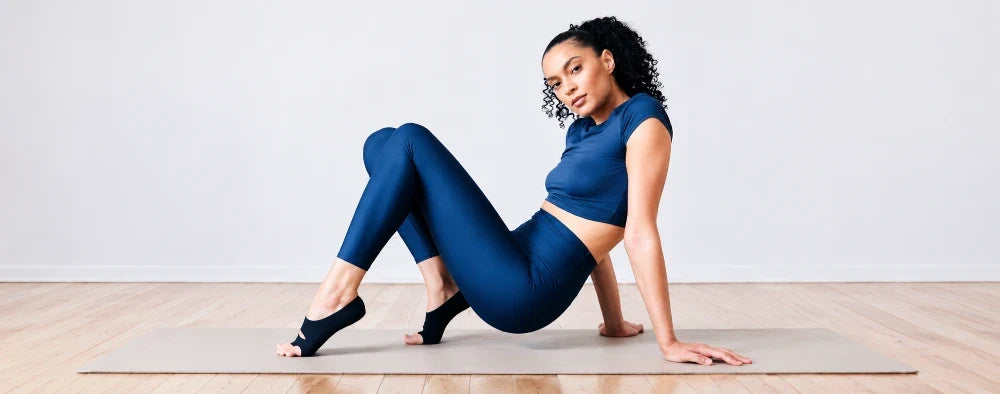
Full-Toe vs Open-Toe Grip Socks for Yoga
Full-toe and open-toe grip socks mainly differ in how much of the foot they cover. Your choice depends on whether you want a more enclosed feel or greater contact with the mat.
|
Feature |
Full-Toe Grip Socks |
Open-Toe Grip Socks |
|
Toe coverage |
Encloses the entire foot |
Leaves the toes exposed |
|
Surface feel |
Places fabric between the foot and mat |
Allows the toes to touch the mat directly |
|
Toe movement |
Feels closer to a traditional sock |
Leaves the toes free to spread |
|
Warmth |
Adds insulation around the front of the foot |
Keeps the front more open |
|
Suit |
Yin, restorative yoga, or slower sessions in cool rooms where warmth and coverage matter |
Standing flows, balance poses, and sequences where toe splay or direct mat contact feels useful |
Full-toe styles suit slower sessions, cool rooms, or anyone who prefers an enclosed feel. Open-toe designs work well when direct mat contact and toe freedom feel natural to your practice. Secure fit and dependable grip remain the key considerations with either style.
When You Might Practice Barefoot Instead
Barefoot practice works well when the surface already feels secure and you are comfortable without extra coverage. At home, a clean, grippy mat gives your toes direct contact with the surface, which can feel natural through poses and transitions.
Grip socks become useful in shared studios, on slick floors, or in cool rooms. They add grip underfoot plus a layer between your skin and communal surfaces.
Choosing Grip Socks for Yoga
The right grip socks should feel secure without getting in the way of how your feet naturally move. Look for dependable traction, a toe design that suits your practice, a close fit that stays put, plus breathable construction that feels comfortable from warm-up to final pose.
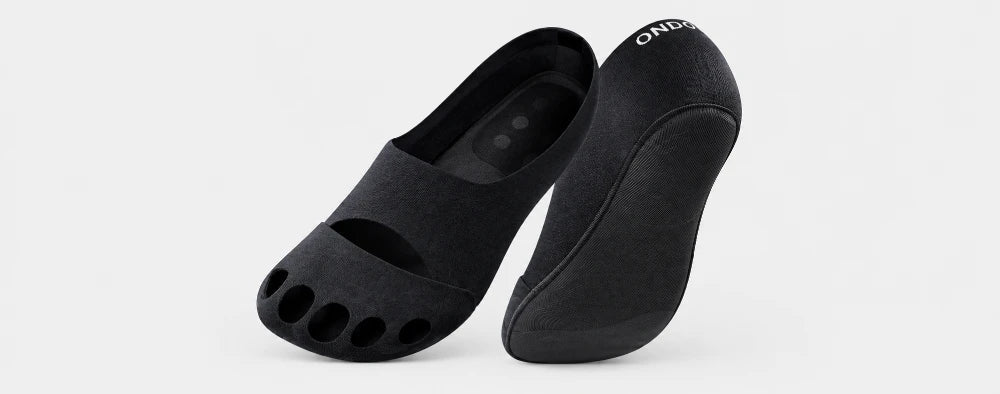
Our Studio Toe Grip Socks bring those details together with an open-toe design that leaves the toes free to spread, a resilient 330D base for steady mat contact, internal silicone for a secure fit, plus Dual-Zone Construction that keeps the foot settled while the toes stay open. They are also backed by our No Slip Guarantee®, subject to applicable terms. Explore the Studio Toe Grip collection to find the pair that fits your practice.

FAQs on Wearing Socks for Yoga
Are grip socks better than regular socks for yoga?
Do you need socks for yoga?
Are open-toe yoga socks better?
Can you do yoga in regular socks?
Do yoga socks help you grip the mat?
Read more
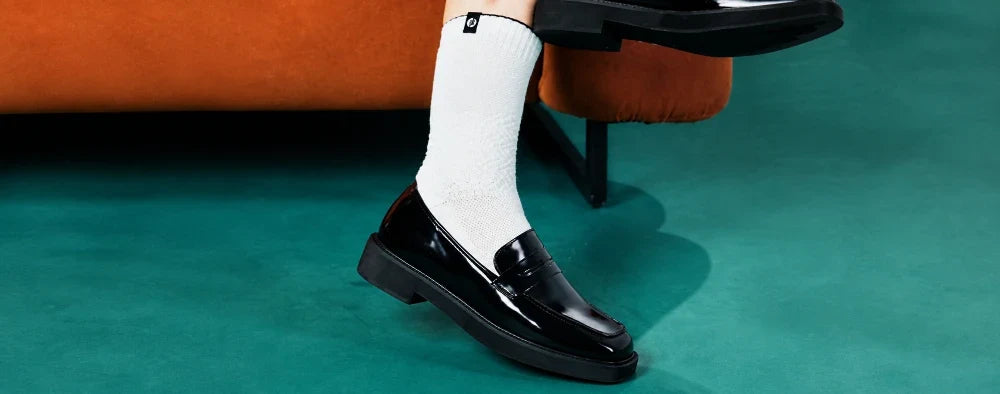
Are there compression crew socks? Yes. They use a supportive knit in a crew-length profile that sits around the lower calf, making them a comfortable option for people who want gentle support witho...
Are yoga socks worth it? Usually, yes, especially for studio classes, slick floors, or anyone who likes a little extra warmth and coverage. They add traction underfoot and reduce direct contact wit...