



Best Cotton Crew Socks: Compression, Cushioning & Fit
Most crew socks feel fine in the store. By midday they've bunched at the ankle, shifted toward the toe, or gone thin right where you need cushioning. The cotton isn't the problem. The construction is.
The best cotton crew socks are built differently - with compression that holds the sock in place, cushioning placed where pressure actually builds, and a fit that stays consistent from the first hour to the last. Cotton is the starting point. Everything else is construction.
Most Cotton Crew Socks Start with Similar Materials
Cotton works for everyday socks because it's soft against skin, breathes well, and stays comfortable through a full day of wear. Those qualities matter. So does sourcing - certifications like GOTS and OCS are meaningful distinctions worth looking for. But neither tells you how a pair will feel by the end of the day.
Where crew socks diverge is construction. What separates high quality cotton crew socks from basic ones isn't the fiber - it's how the knit is built, where cushioning sits, and how the design holds up through a full day. Material matters. Construction matters more.

What Makes One Cotton Crew Sock Better Than Another?
Four construction details separate a crew sock that holds up through a full day from one that doesn't. Each one is independent - but together they determine whether you notice the sock at all.
Breathable Cotton
Breathability in a crew sock comes from the knit structure, not just the cotton content. Mesh zones or open-knit panels allow airflow over the areas where heat tends to build - typically the upper foot and lower leg. A densely knit construction can be soft and still run warm.
Compression That Helps the Sock Hold Its Shape
Compression in an everyday crew sock isn't about athletic recovery - it's about helping the sock stay where you put it. Without structure, the fabric can bunch around the ankle, migrate toward the toe, and shift in ways that create pressure points. The goal is fit retention: a pair that feels the same at hour eight as it did at hour one.
Cushioning Where You Need It
The best cotton crew socks for men and women place cushioning specifically under the ball and heel, not uniformly throughout. Uniform padding adds bulk without targeting the pressure points that matter - commuting on hard floors, standing at a desk for hours, walking through an airport. Targeted cushioning addresses those moments without making the fit feel too thick.
Seamless Toes
A seamless toe construction reduces the raised ridge of thread that runs across the toe box in traditionally sewn socks. On a standard crew sock, that seam can sit against or near the tips of the toes. Across a full day - or in a tighter shoe - it can create steady, low-grade friction. Not a luxury feature. A construction choice that affects how the sock actually feels to wear.

Cotton Crew Socks vs Synthetic Crew Socks
Pick cotton for the days you're not thinking about your socks. Pick synthetic when you're actually working up a sweat - it dries faster and stays drier.
|
Feature |
Cotton Crew Socks |
Synthetic Crew Socks |
|
Comfort against skin |
Soft, natural feel |
Can feel smooth but varies |
|
Breathability |
Good for everyday wear; depends on knit |
Strong in technical knits |
|
Moisture management |
Absorbs moisture; slower to dry |
Wicks and dries faster |
|
Shape retention |
Benefits from structured compression to hold form |
Often holds shape through synthetic elasticity |
|
Everyday wear |
Comfortable for most daily use |
Better for high-exertion activity |
|
Organic options |
Available (OCS-certified, GOTS-certified) |
Less common |
Why Compression Belongs in an Everyday Crew Sock
The difference between a cotton crew sock that holds its shape and one that doesn't often comes down to compression. Targeted compression zones built into the knit at the ankle and instep - alongside elastane, polyamide, and overall knit structure - keep the sock from shifting, not as a performance feature, but as a fit-retention one. The result is a sock that feels the same at the end of the day as it did at the start.
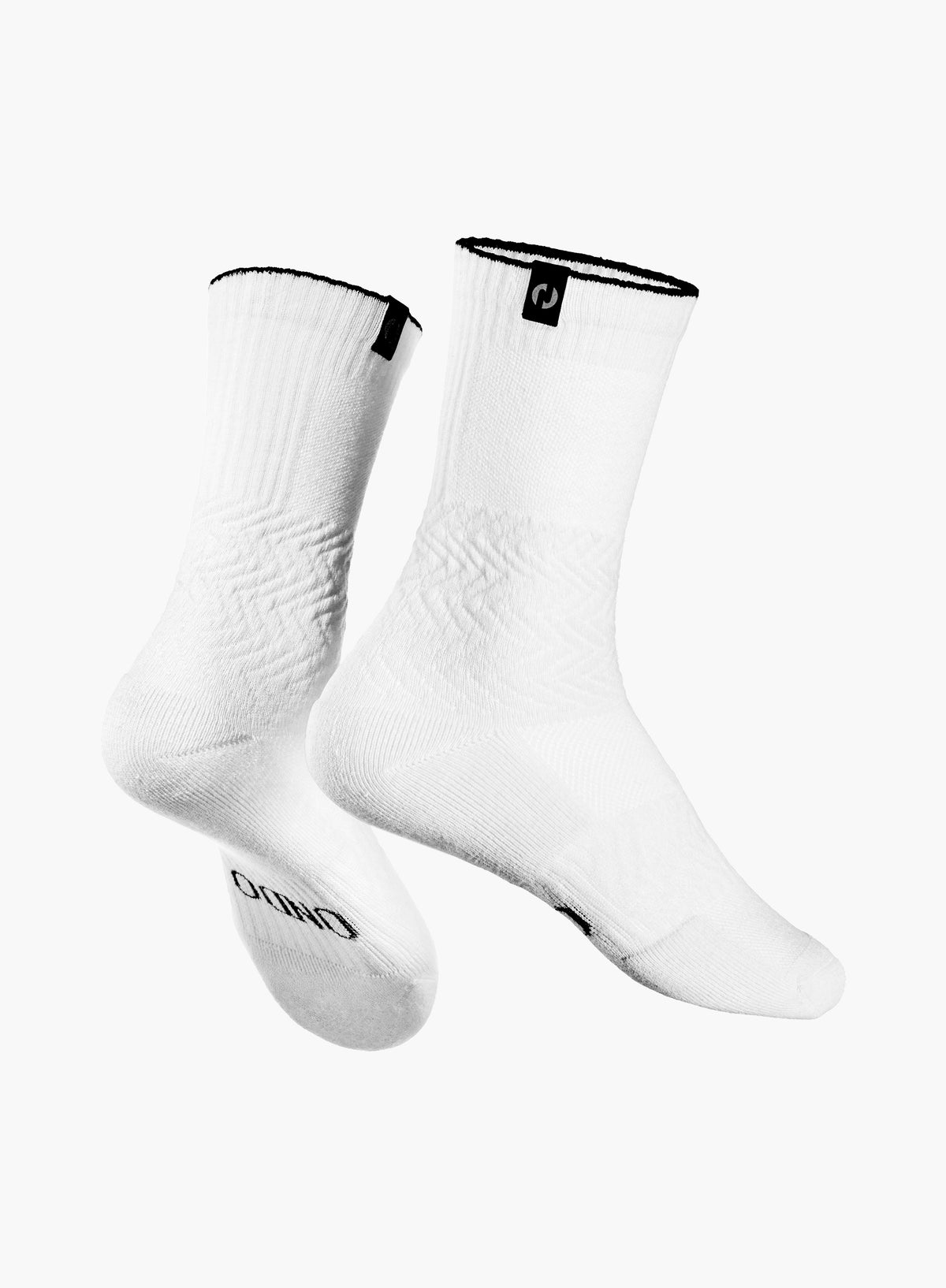
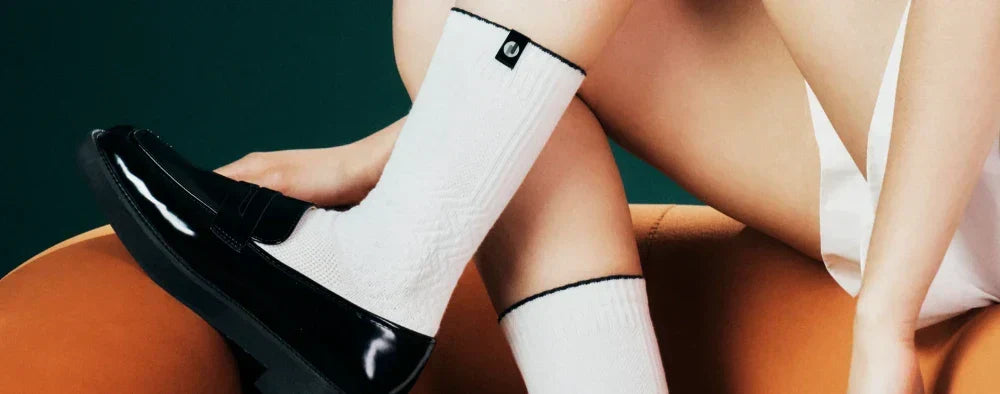
ONDO's Contour Compression Crew Socks show what this looks like in practice: GOTS-certified organic cotton for the cotton-led feel, 16% polyamide for structure, and 2% elastane for stretch.
- 11 compression zones around the ankle and instep help keep the fit steady as you move.
- Cushioned sole addresses underfoot pressure during commuting, standing, and walking.
- Seamless toe reduces friction at the toe box - where seams can create discomfort.
- Breathable mesh zones on the upper foot manage airflow without compromising structure.
- The Contour Compression Crew Socks are available in Stone White, Slate Gray, and Carbon Black, in sizes S-XL. The neutral color options pair easily with everyday shoes while keeping the focus on fit, comfort, and construction.
It's designed for everyday wear, with the same focus on fit and thoughtful construction found across ONDO's no show sock collection.
Choosing the Right Cotton Crew Sock for Daily Wear
The right crew sock depends less on preference and more on what your day actually looks like. Whether you're looking for the best cotton crew socks for women or men, cushioning, compression, and breathability all matter - but their relative importance shifts depending on how you're on your feet.
Long Days on Your Feet
For long shifts and hard floors, sole cushioning and ankle compression are the two things worth checking first - whether you're shopping for the best cotton crew socks for men or women. Eight hours on concrete makes that clear - forefoot and heel take the most pressure, and without compression at the ankle and instep, the sock starts sliding by hour three.
Daily Commuting
A cushioned sole and fit-retention compression are worth prioritizing for daily commuting. The mix of walking, standing, and sitting - often across hard floors in shoes that favor shape over cushioning - puts steady pressure on the forefoot and heel while pulling the sock out of place. Without both, mid-journey adjustments become routine.
Travel
Seamless toe and compression matter most when traveling, with cushioning still useful for long airport walks. Hard floors, long distances, shoes on and off at security: a sock that bunches in the toe box or slides between gates turns an already long day longer. Those two features are what keep that from happening.

Everyday Wear
On low-key days, breathability and a stable fit are enough - strong compression and heavy cushioning are usually unnecessary. Errands, home office, nothing demanding: the sock just needs to stay put and not run warm. If sourcing matters, OCS or GOTS certification is worth checking, though it won't change how the sock feels.
Are Organic Cotton Crew Socks Worth Considering?
Organic cotton crew socks are worth considering - but the certification matters more than the label. The term refers to how the fiber is grown under organic farming standards, not to how the sock is built. OCS certification verifies organic content and chain of custody. GOTS goes further, covering the full textile processing chain including ecological and social criteria. Both are meaningful third-party distinctions, not just brand claims.
What neither certification tells you: whether the sock has good compression, where the cushioning sits, how the toe is finished, or whether the fit holds over a full day. For cotton crew socks, women or men searching for organic options should look for OCS or GOTS specifically - then evaluate fit, compression, and construction separately.
Wrap Up
Cotton is a reliable everyday choice - but the fiber alone doesn't make a good crew sock. The ones worth wearing are built with compression that holds the fit, cushioning placed where pressure actually builds, and a seamless toe that reduces friction most people have accepted as normal. Cotton gets you started. Construction determines whether you notice the sock at all by the end of the day.
FAQs about Best Cotton Crew Socks
What are the best cotton crew socks for everyday wear?
Are organic cotton crew socks better?
What height are crew socks?
Are cotton crew socks good for summer?
Do cotton crew socks shrink?
Read more
What are crew socks? Crew socks are socks that rise above the ankle and typically reach the middle of the lower leg, usually about 6 to 8 inches, or roughly 15 to 20 cm, up the leg. They are the st...
Merino wool vs cotton socks comes down to priorities, not a single winner. Most people reach for cotton out of habit and for its familiar softness. Merino wool tends to offer advantages in temperat...