


What Are Crew Socks? Length, Style & When to Wear Them
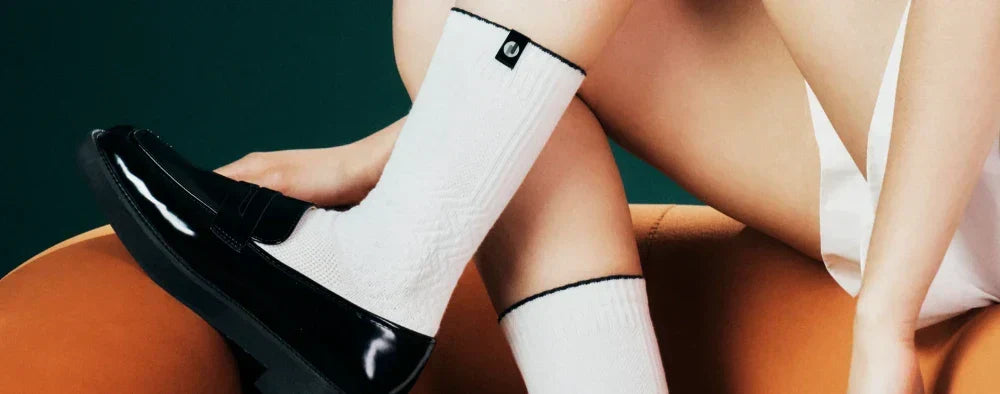
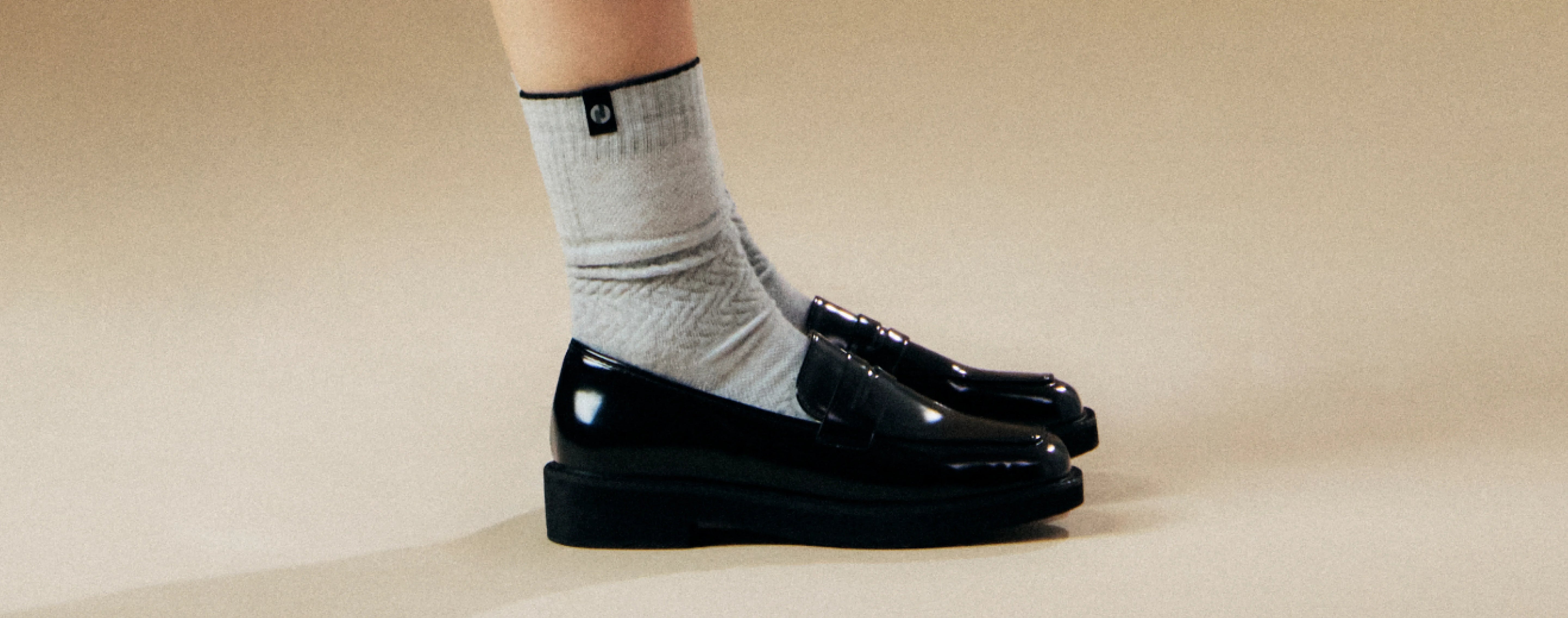
What are crew socks? Crew socks are socks that rise above the ankle and typically reach the middle of the lower leg, usually about 6 to 8 inches, or roughly 15 to 20 cm, up the leg. They are the standard, do-everything sock length: high enough to add coverage and cushioning, but low enough to sit neatly under jeans or trousers.
They are popular because they work with many shoes and most everyday situations. Here is where crew socks sit, how they compare with other sock lengths, and when to wear them.
What Are Crew Socks?
Crew socks have become the standard sock length because they balance coverage and versatility. They sit high enough to protect the ankle and lower leg, but not so high that they feel bulky or restrictive. That makes them just as comfortable with sneakers as they are with boots, loafers, or everyday shoes.
Rather than being designed for one specific activity, crew socks work across a wide range of situations. That's why they're often the default choice for commuting, walking, travel, and everyday wear.

Quick answer: Crew socks are socks that extend above the ankle and typically reach the middle of the lower leg.
How Long Are Crew Socks?
Crew socks typically rise about 6 to 8 inches, or roughly 15 to 20 cm, up the leg and usually sit around the middle of the lower leg. Exact height varies by brand, sock size, and leg length, so treat the range as a guide rather than a fixed rule.
On a taller person, a crew sock may sit slightly lower. On a shorter leg, the same sock may sit higher on the calf.
|
Sock type |
Typical height |
|
No-show |
Hidden in the shoe |
|
Ankle |
At or just below the ankle |
|
Quarter |
Just above the ankle |
|
Crew |
Around mid-calf |
|
Knee-high |
Just below the knee |
Crew Socks vs Other Sock Lengths
The main difference between crew socks and other lengths is how much of the leg they cover, which affects how visible they look and how much warmth they add.
|
Length |
Height |
Styling |
Everyday use |
|
Ankle |
At or just below the ankle |
Low-profile, barely visible |
Warm weather, low shoes, casual sneakers |
|
Quarter |
Just above the ankle |
Subtle, sporty |
Everyday sneakers, walking, light coverage |
|
Crew |
Around mid-calf |
Visible, outfit-friendly |
Year-round wear, most shoes, commuting, casual outfits |
|
Knee-high |
Just below the knee |
Deliberate, higher-coverage |
Cold weather, boots, added warmth or support |
Crew Socks vs Ankle Socks
Crew socks reach around mid-calf, while ankle socks stop at the ankle bone. That extra height shows above most shoes and adds warmth in colder weather. The lower cut feels lighter, which makes it better for summer.
The main difference is visibility. Crew length becomes part of the outfit, while ankle length stays closer to the shoe.
Crew Socks vs Quarter Socks
Quarter socks sit just above the ankle, a few inches below crew socks. They offer more leg coverage than ankle socks, but less than crew length.
For sneakers, both lengths work well. Crew length shows more above the shoe and covers more of the lower leg, which helps when temperatures drop or when taller shoes rub at the ankle.
Crew Socks vs Knee-High Socks
Knee-high socks cover the full calf and stop just below the knee, which is far more fabric than a mid-calf crew sock. That extra length adds warmth, so knee-highs often make sense for winter, boots, or specific support needs.
Crew socks stay more versatile year-round. They still show above the shoe, but keep the lower leg looking cleaner and less covered.
What Are Crew Socks Used For?
What crew socks are used for, most often, is everyday wear: commuting, walking, travel, office environments, and casual outfits. Their mid-calf height gives more coverage than ankle or quarter styles, so they work well with sneakers, loafers, and boots without reaching as high as knee-highs.

The right pair depends on the day. Cushioned crews add comfort when you stand or walk for hours. Wool or cotton blends help balance warmth and airflow, while thinner cotton crews feel lighter in warmer conditions.
Why Crew Socks Became So Popular
Crew socks became popular because they hit a practical middle ground: more coverage than ankle or quarter styles, less warmth and bulk than knee-highs. That makes them easy to wear across seasons, with sneakers, loafers, and boots.

There is a styling reason, too. As visible socks became a normal part of everyday dressing, crew length stopped feeling purely practical. It became a clean way to add shape, color, or texture to an outfit without making the detail the whole point.
What Should You Look for in a Crew Sock?
A good crew sock comes down to construction: fit, materials, cushioning, compression, and a seamless toe. Height is the easy part. Comfort lives in the build.
Fit
A crew sock should hug the calf without digging a line into your leg, then hold that shape all day instead of pooling around your ankle by noon. The cuff matters most. Too loose and it slides down. Too tight and you feel it for hours. Good ribbing keeps it up without leaving a mark.
Materials
Organic cotton feels soft and breathable against the skin through a long day, and the right blend helps reduce a damp feel inside the shoe. Many modern crew socks add a little polyamide for durability and a touch of elastane for stretch. That mix decides whether the sock holds its shape or sags after a few washes.
Cushioning
A cushioned sole helps soften the impact of hard floors and long walks, the kind your feet only notice hours later. The cushioning should sit under the heel and ball of the foot, where pressure builds. Too much can feel bulky in a slim shoe. The right amount is the kind you stop noticing, which is the point.
Compression
Gentle, zoned compression can help a crew sock feel more supportive around the foot and ankle during long days on your feet. Zoned means the pressure is placed where structure helps most, rather than squeezing evenly all over. For everyday wear, compression should feel supportive, not clinical. It is not medical-grade compression, and it should still feel wearable through a full day.
Seamless Construction
A seamless toe removes the raised ridge that can press into your toes, especially after hours of wear. With less bulk at the front of the shoe, there is less rubbing and less bunching by mid-afternoon. It is a small detail that can decide whether you think about your socks at all.
An Example of Modern Crew Sock Design
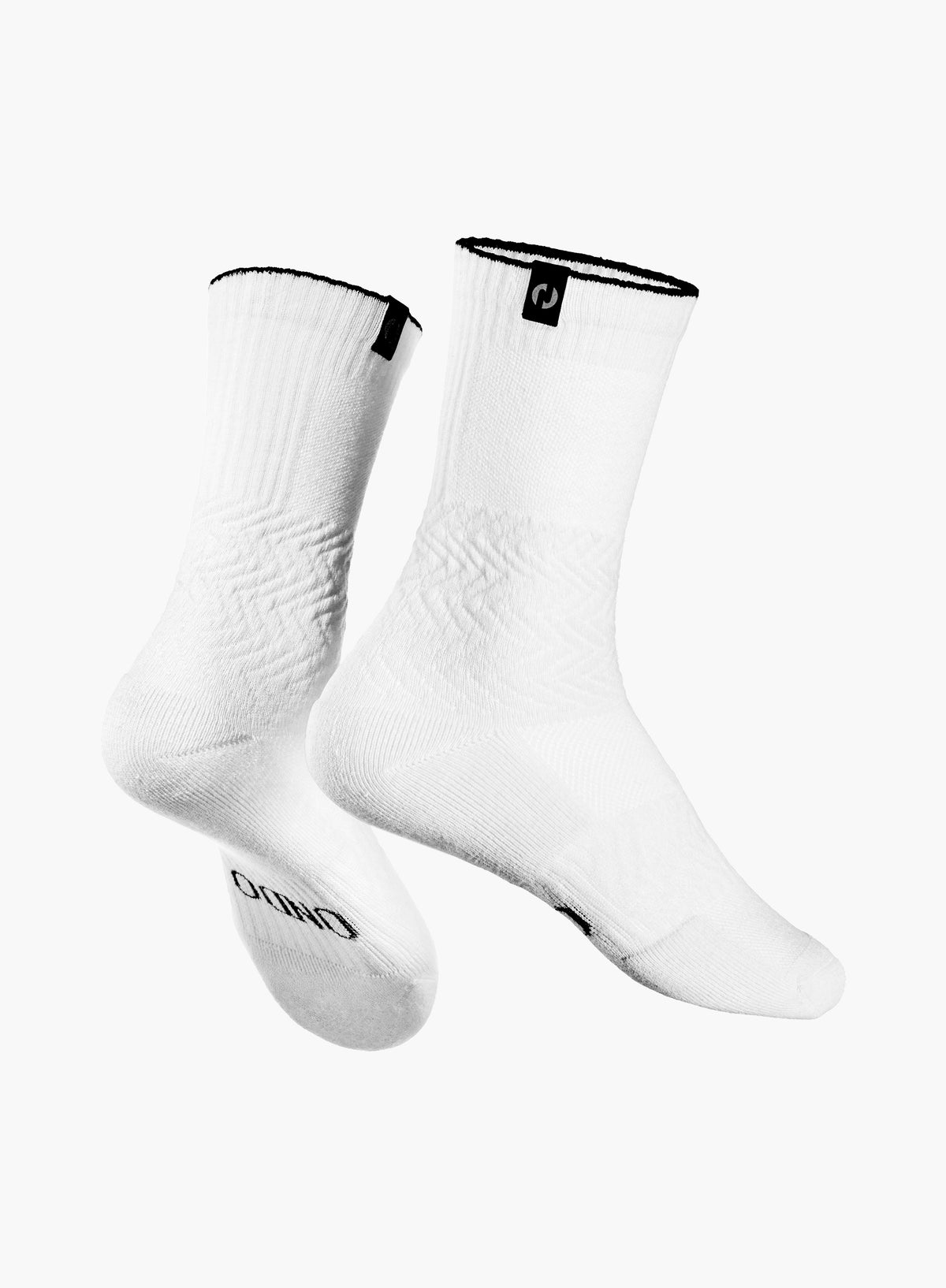
A modern crew sock is not just a taller basic sock; it can use targeted construction to improve everyday comfort. In ONDO’s Contour Compression Crew Socks, that design approach shows up in the details: 11 compression zones around the foot and ankle, a cushioned sole for time spent standing or walking, and a seamless toe that reduces bulk at the front of the shoe.
Made with GOTS-certified organic cotton blended with polyamide and elastane, it shows how a familiar sock length can carry real construction detail. The point is the design thinking, not the label: a crew sock can feel very different when the build is considered.
Wrap Up
So, what are crew socks? They're a mid-calf sock length that sits above the ankle and works across shoes, seasons, and occasions. That coverage-to-comfort balance is why they're the standard, and why they're worth getting right. People tend to pick a sock by height first. Comfort almost always comes down to construction.