



Best No Show Dress Socks for Men
The best no show dress socks for men sit discreetly beneath loafers and dress shoes, stay comfortable through long hours, and hold securely at the heel. A low-cut shape, breathable fabric, reliable grip, and accurate sizing create a smooth feel without adding unnecessary bulk.
The wrong choice becomes noticeable quickly. Edges peek above the shoe line, the heel starts to slip, excess fabric gathers underfoot, or heat builds as the day goes on. This guide covers the materials, sizing, and construction details that matter for everyday dress wear.

What Makes the Best No Show Dress Socks for Men?
A good pair combines a discreet cut with a light, secure feel inside the shoe. Five details shape how well it works for long days in loafers or dress shoes:
- Low profile: Falls below the shoe opening so the edge stays out of sight.
- Lightweight construction: Adds little bulk inside close-fitting footwear.
- Secure heel grip: Reduces slipping as the foot moves throughout the day.
- Breathable materials: Help heat and moisture vapor escape, easing a stuffy feel.
- Proper fit: Holds the fabric close to the foot, reducing bunching and shifting.
Choosing the Right Material
Material shapes how a no show sock feels inside dress shoes, especially over a long day. The best choice depends on whether you value softness, temperature balance, or moisture control most.
Organic Cotton
Organic cotton feels soft against the skin, making it an easy choice for everyday dress wear. That gentle feel stays comfortable through long hours in loafers or dress shoes.
A lightweight construction keeps the sock from feeling bulky inside the shoe. Breathability still comes down to the knit and overall thickness, so a well-balanced design matters as much as the fiber itself.
Merino Wool
Merino Wool works well across changing temperatures, providing warmth in cooler conditions while managing heat and moisture as the day gets warmer. Its fine fibers also feel soft against the skin, helping it stay comfortable during long hours of wear.
Odor control is another useful benefit during extended use. Merino Wool naturally helps limit odor buildup, making it a practical choice for busy workdays, travel, or any time the same pair stays on from morning to evening.
Technical Fabrics
Moisture-wicking nylon or polyester blends are especially useful on long days when feet start to feel warm or damp. They draw sweat away from the skin and are designed to dry quickly, reducing a damp or stuffy feeling during extended wear.
Their lightweight construction also keeps bulk to a minimum. Inside close-fitting dress shoes, the thin layer sits neatly around the foot without taking up much space.
Features Worth Looking For
With no show dress socks for men, small construction details become easier to notice after several hours on your feet. Look closely at how the pair sits at the heel, follows the shoe line, handles warmth, and fits around the foot.
Heel Grip
A good heel grip helps keep the back of the sock steady without pressing too firmly against the skin. Wear the pair with your usual loafers or dress shoes, then walk around for a few minutes to see how it settles.
Watch for slipping at the heel, fabric gathering near the arch, or pressure around the contact area. If everything stays smooth and easy through those first few steps, that is a positive sign for the overall fit.
Low-Cut Profile
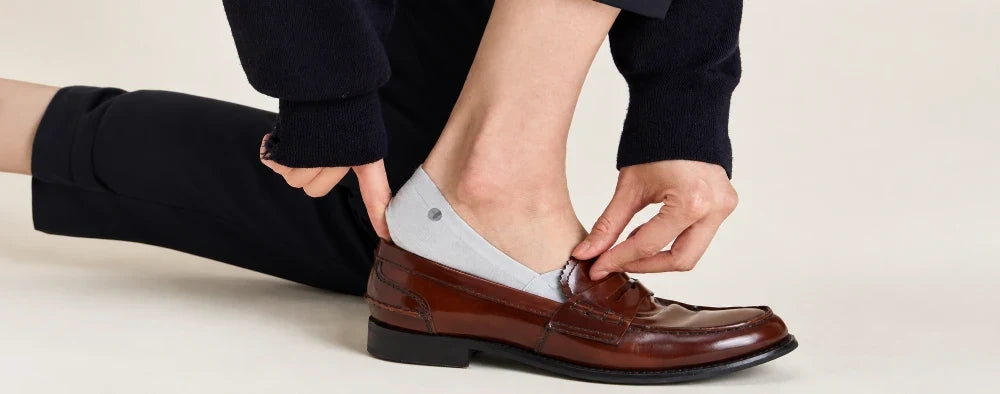
The top edge should sit neatly below the shoe line, especially around the vamp and sides. Closed styles leave a little more room for coverage, while low-vamp designs need a deeper cut across the top of the foot.
To check the fit, wear the socks with your shoes and stand, walk, and flex the foot for a few minutes. Watch the vamp and sides, since those are usually the first areas where a sock edge begins to show. For a closer look at different cuts, see our guide to socks for loafers.

Breathability
Breathability comes from the fabric, knit structure, and overall thickness working together. Look for a light construction that helps heat and moisture vapor escape without making the shoe feel stuffy.
Wear the socks with your usual shoes for an hour, ideally during normal walking. Then check the toes, ball of the foot, and arch for trapped heat or dampness. If those areas feel reasonably dry and not overly warm, that is a good early indicator for continued wear.
Proper Sizing
The right size sits close to the foot without loose areas, pulling, or pressure marks. Too much room leads to shifting and bunching. A pair that runs small can stretch too tightly, dig into the skin, or pull out of position as you move.
Start with the brand’s size guide, then check the heel, arch, and toe area after walking for a few minutes. Look for a smooth surface with no sagging, pinching, or need to readjust the sock.
Common Problems with No Show Dress Socks
Many common issues with no show dress socks for men come from sizing, cut, or construction. Once you know what is causing the problem, it becomes much easier to find a pair that feels better in your everyday shoes.
- Slipping: A loose fit, weak heel grip, or mismatched cut can make the back slide down as you walk. Look for a pair that sits close to the foot and feels steady around the heel.
- Bunching: Extra material often gathers beneath the arch or around the toes when there is too much room. A smooth fit with gentle stretch lets the sock follow the foot without leaving folds.
- Visible edges: A profile that sits too high can peek above the shoe line. Put your shoes on and check the vamp and sides to see whether the top edge stays covered as you move.
- Overheating: Thick or dense construction can start to feel warm after several hours. A lighter, breathable knit can help reduce heat buildup and that stuffy feeling inside the shoe.
- Poor durability: Regular washing, friction, and repeated stretching gradually wear down the fabric. Good stretch recovery helps the sock return to shape and maintain a smooth fit between wears.

Why Construction Matters More Than Material
Material influences softness, temperature balance, and moisture control, but construction shapes how a no show sock actually sits inside dress shoes. A low-cut profile helps keep the edge below the shoe line, stretch lets the fabric follow the foot closely, and a secure grip reduces shifting through everyday movement.
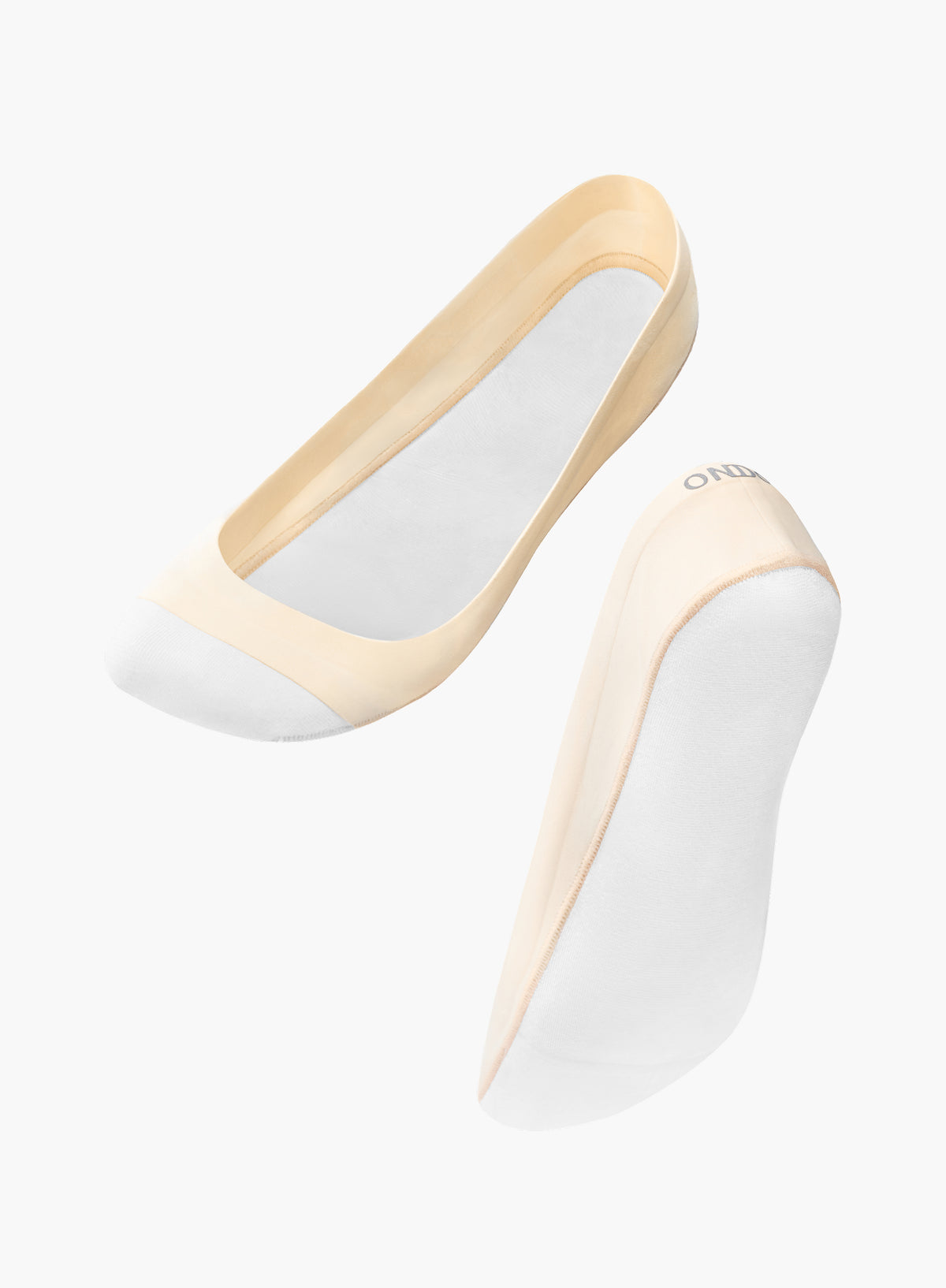
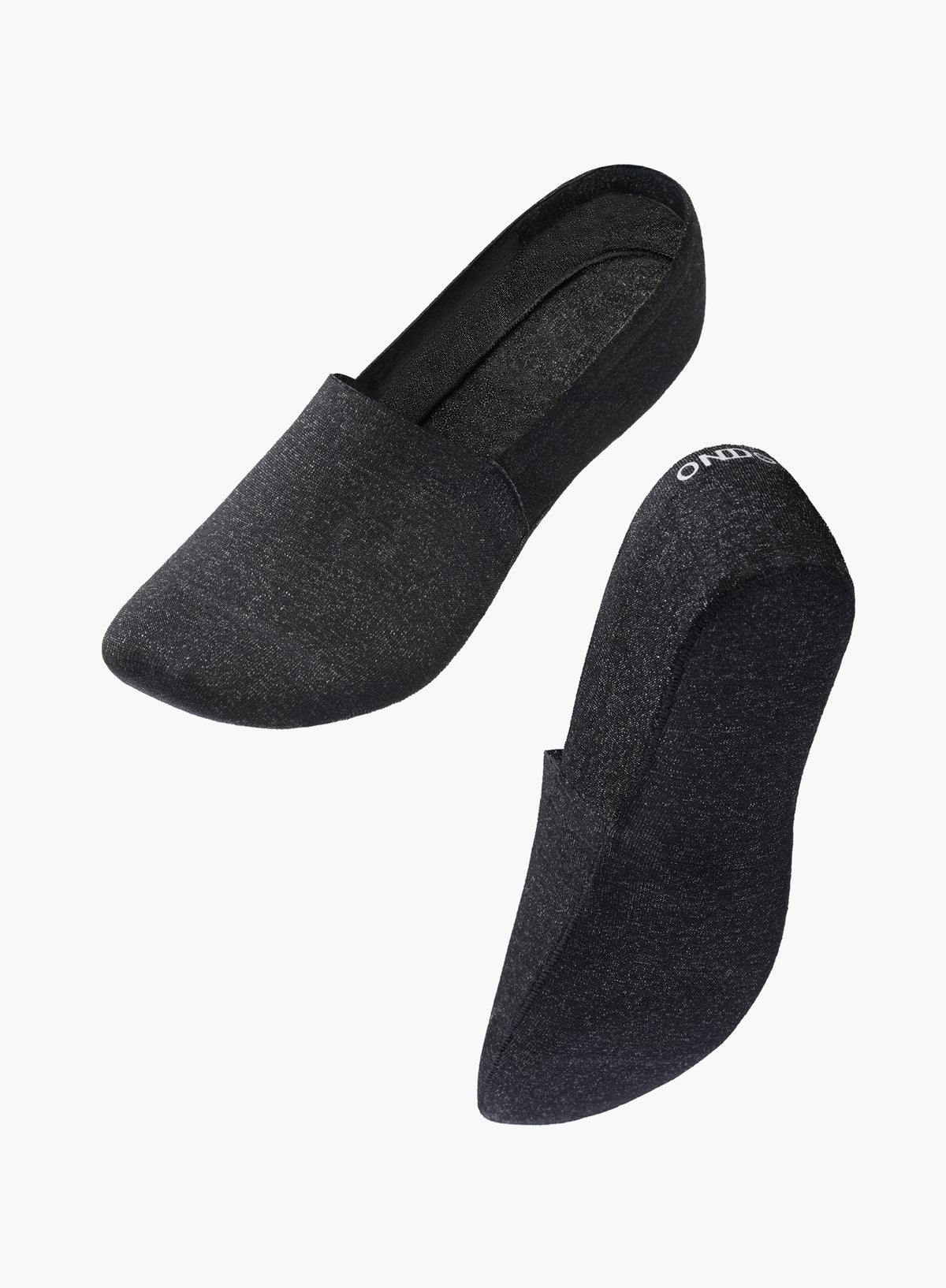
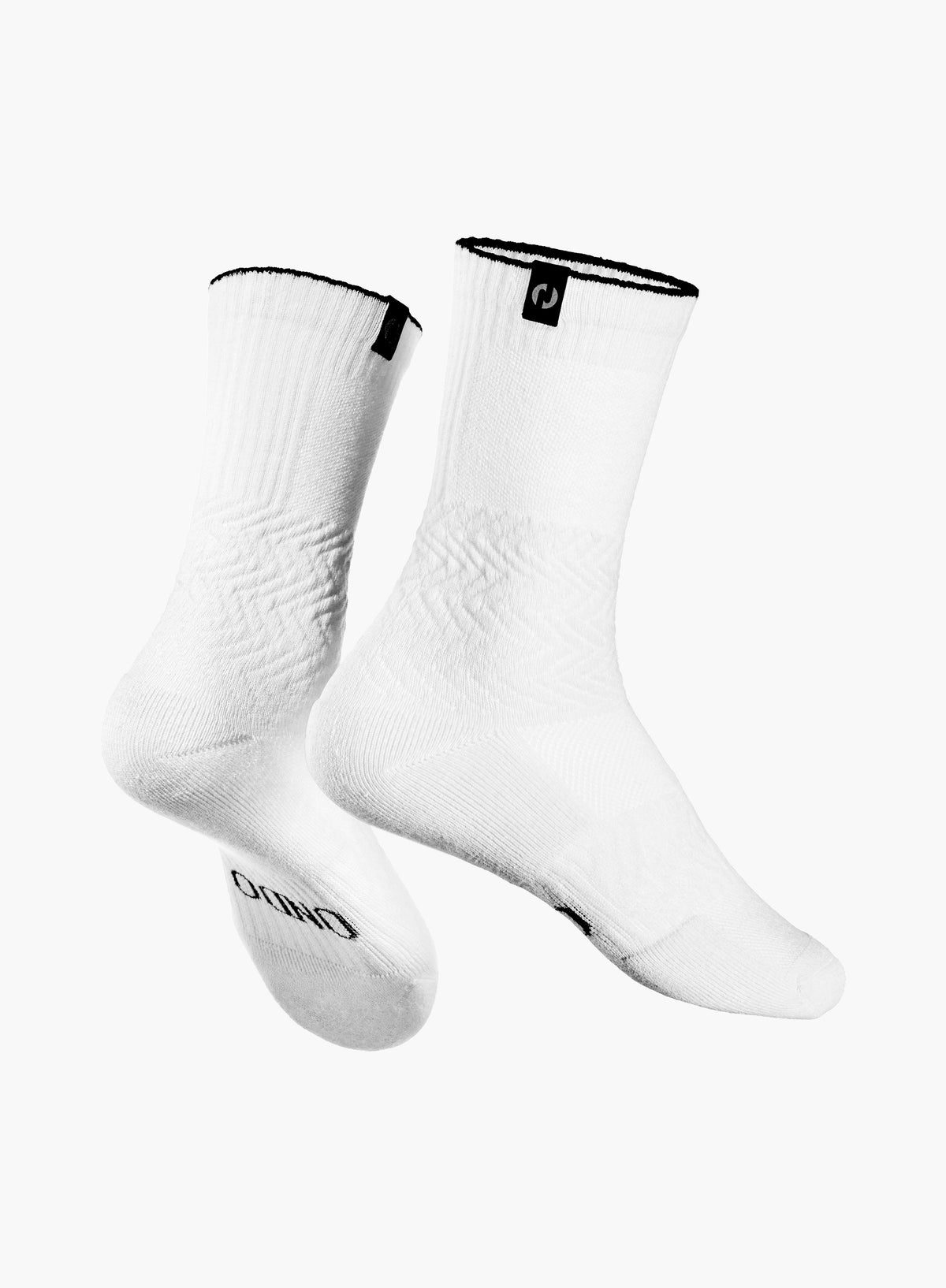
ONDO Low-Cut No Show Socks combine these features in a lightweight, close-fitting design. The MIPAN aqua-X nylon and spandex body adds flexibility, paired with an organic cotton and aerolight bottom blend for softness and moisture management. Patented silicone improves hold, and the No Slip Guarantee® offers a refund if the sock slips off while walking in shoes, subject to the program terms.
Explore our No Show Socks collection to find a low-cut option that fits your everyday dress shoes.
FAQs
What material is best for dress socks?
How should no show dress socks fit?
Can you wear no show socks every day?
Read more
Thin socks for high heels are tricky because high heels leave little room for extra fabric. Even a small amount may peek above the opening, shift as you walk, or gather beneath the arch. Going bare...
The best cushioned athletic socks put extra softness where your feet feel it most, especially at the heel and ball of the foot. The rest of the sock stays breathable and low-profile, so you get com...