



Socks for Heels: What to Wear With Different Styles
The best socks for heels depend on the shoe design, fit, and intended visibility. Toe coverage, side openings, heel and back design, and available interior space determine whether invisible no show socks, half socks, sheer ankle socks, or visible ankle and crew socks suit the shoe.
This guide compares each option for enclosed pumps, slingbacks, open-toe heels, and strappy designs. It also explains why heel height alone does not determine the right choice.

What Types of Socks Can You Wear With Heels?
The main options are invisible no show socks, half socks or toe covers, sheer ankle socks, and visible ankle or crew socks. The right cut follows the shoe opening, fits within the available interior space, and creates either a concealed or intentionally visible look.
Invisible or No Show Socks
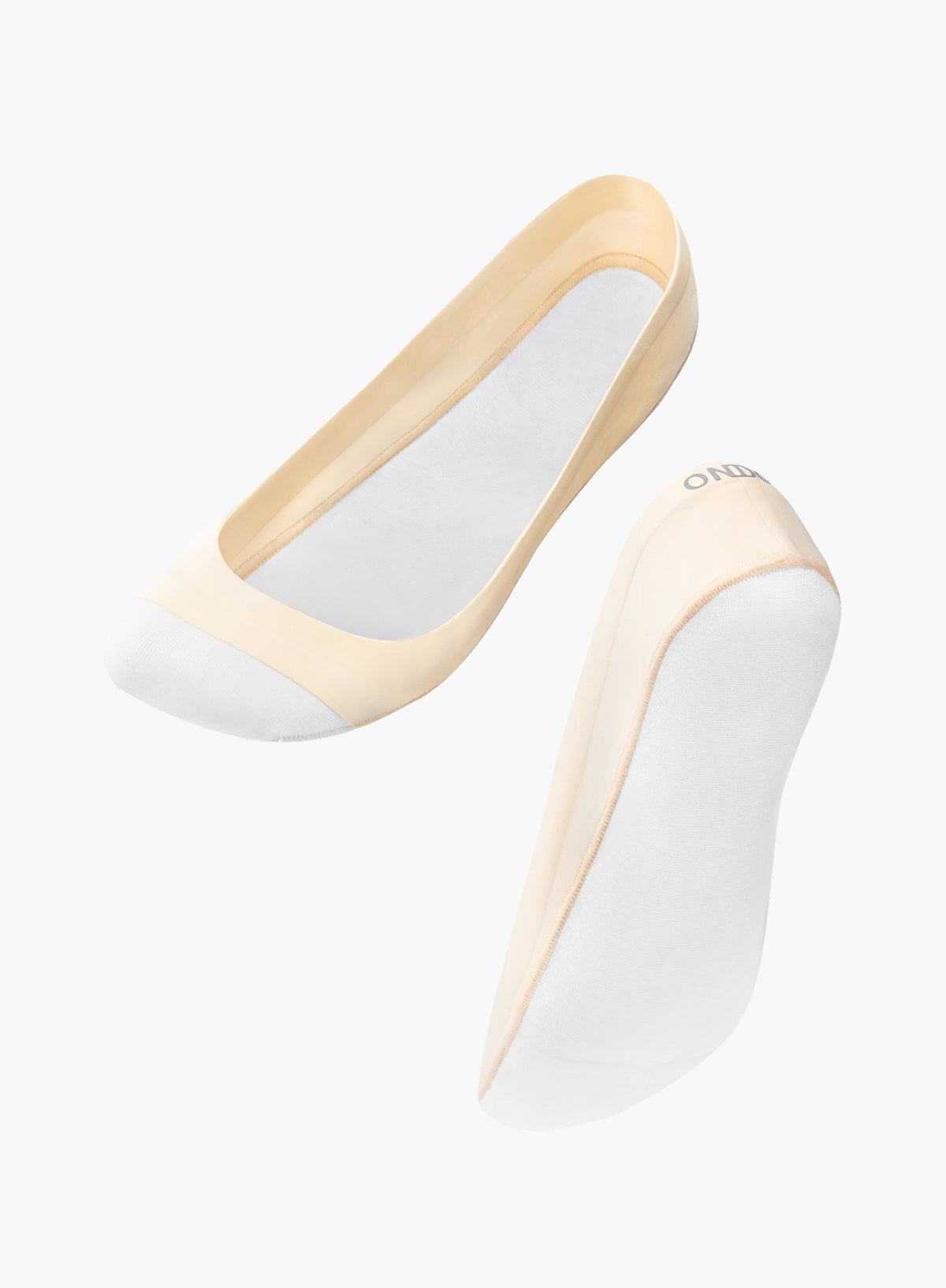
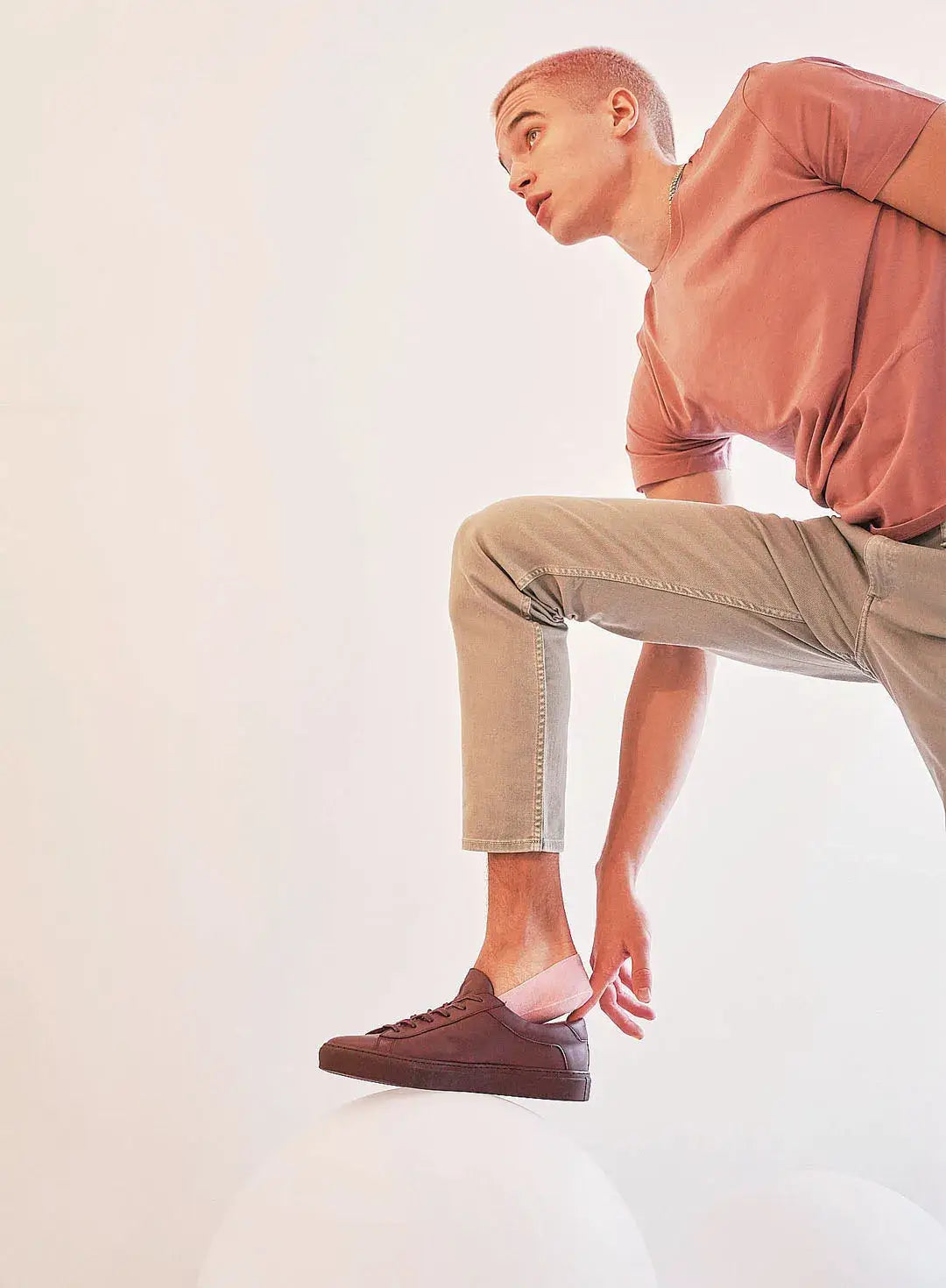
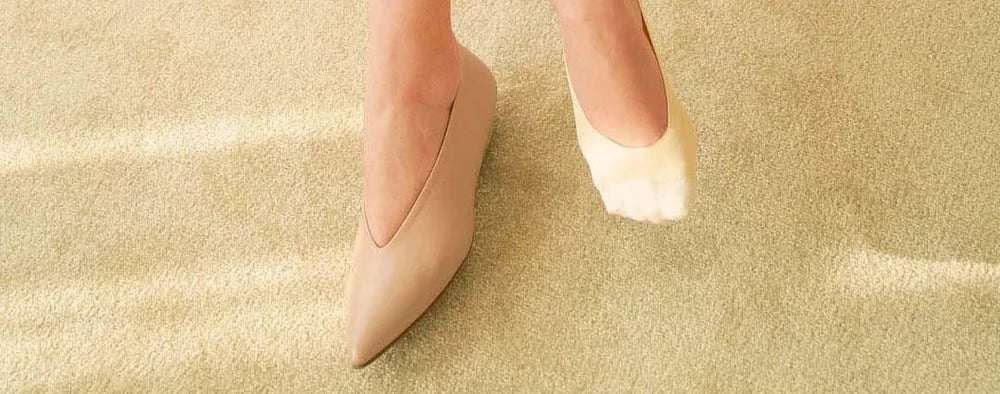
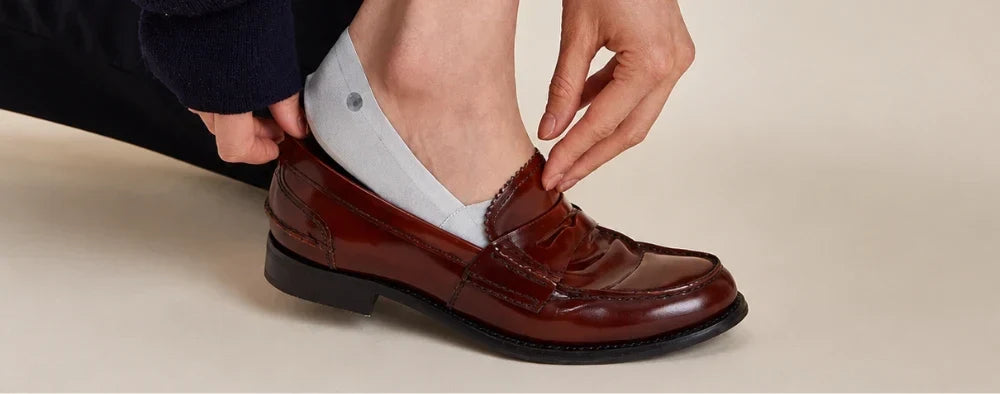
Invisible socks for heels use a low-cut profile that covers the toes, sole, sides, and heel. This construction suits closed-toe, closed-back heels that conceal most of the foot but still require a thin fabric layer between the foot and shoe.
Accurate sizing and a secure heel grip help invisible socks for high heels remain stable in fitted footwear. Shallow vamps or low sides reveal the sock edge when the cut does not closely follow the individual shoe opening.
Half Socks or Toe Covers
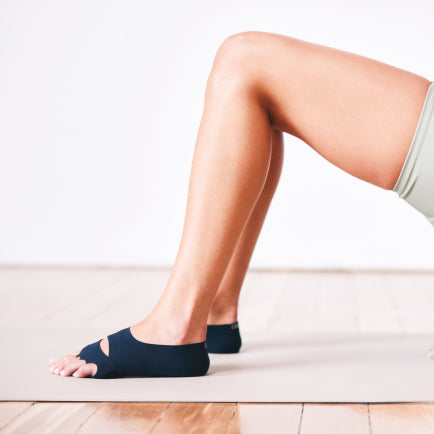
Half socks for heels cover the toes and forefoot, leaving the heel and back of the foot exposed. They suit slingbacks and open-back heels where a full heel section would remain visible.
A close forefoot fit helps prevent shifting, folding, and bunching. The front edge can still show through a wide or low-cut opening, so it needs to remain behind the covered section of the shoe.
Sheer Ankle Socks
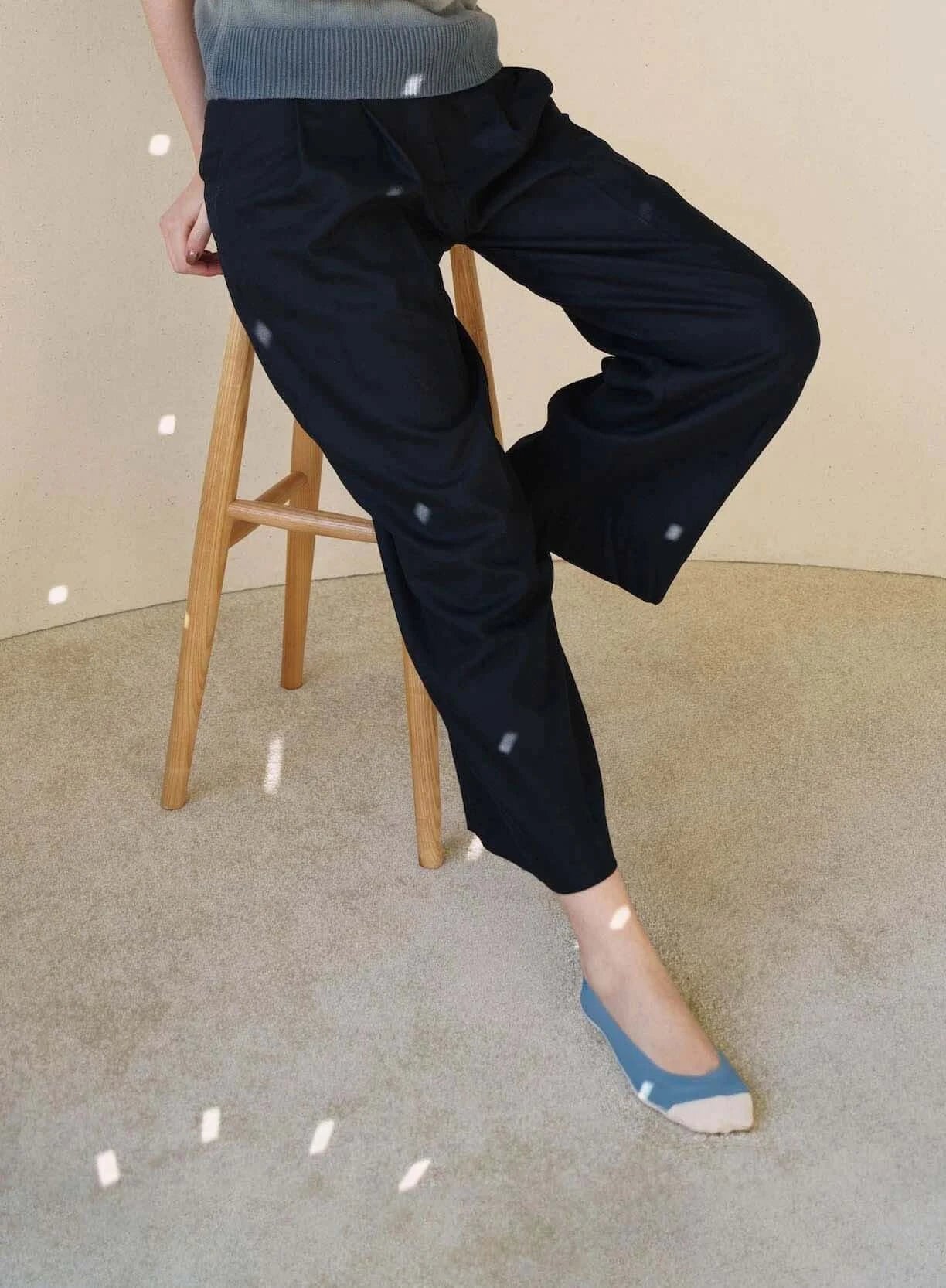
Sheer ankle socks use lightweight, translucent fabric that adds little bulk inside fitted heels. Their fine knit maintains a clean shoe line and creates a visible layer around the ankle.
Transparent or tonal styles create a subtle transition between the foot and shoe. Patterns and textured knits draw attention to the ankle and turn the sock into a deliberate styling detail.
Visible Ankle or Crew Socks
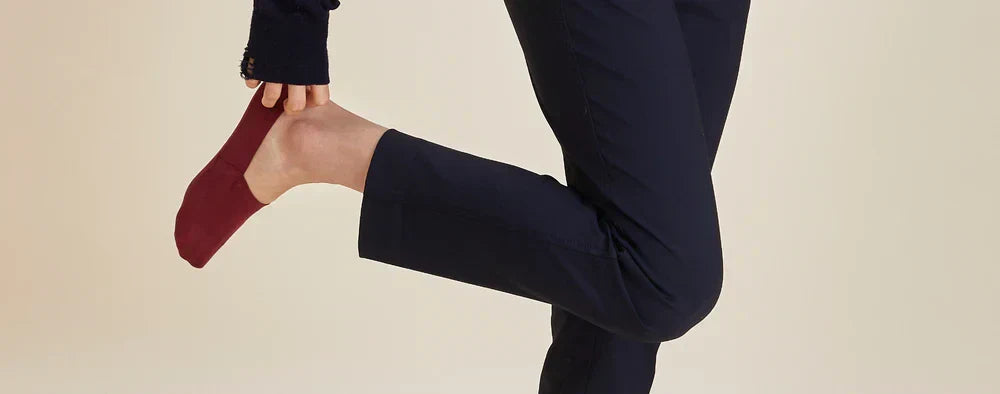
Visible ankle socks for heels and crew socks extend above the shoe opening, making the cuff an intentional part of the outfit. A secure fit keeps the fabric smooth around the ankle or lower leg.
Ankle socks create a shorter visible cuff, and crew socks extend higher to emphasize color or texture. Both suit casual, retro, and preppy styling. Use a knit that fits inside the shoe without pressure or bunching.
Which Socks Work With Different Heel Styles?
The right sock profile depends on the toe, side, and back coverage rather than heel height alone. Use the shoe opening, available interior space, and preferred visibility to narrow the options.
Socks for Pumps
Pumps usually have a closed toe and back, but the vamp depth and side coverage vary. Suitable socks for pump heels either remain below the opening or create a deliberate visible layer without making the fitted shoe feel tight.
- Low-cut no show socks: This profile suits enclosed pumps with enough coverage across the vamp and sides. Keep the sock edge below the opening without adding excess fabric inside the shoe.
- Half socks: A forefoot-only cut provides coverage when a full no show sock appears above a shallow vamp or low side opening. Keep the front and side edges below the shoe opening.
- Sheer ankle socks: Lightweight, translucent fabric creates an intentionally visible layer with classic pumps and Mary Jane heels. The delicate knit gives the ankle area a polished finish without adding bulk.
Socks for Slingback Heels
Slingbacks expose the heel and use a back strap to secure the shoe. A suitable sock profile stays clear of the strap or creates a deliberately visible layer.
- Half socks: Forefoot-only coverage leaves the heel exposed and keeps the sock away from the back strap. A close fit helps limit shifting across the toes and forefoot.
- Sheer ankle socks: A visible sheer layer frames the ankle and slingback strap as part of the styling. Keep the fabric smooth so it does not gather near or beneath the strap.
Socks for Open-Toe or Strappy Heels
Open-toe and strappy heels expose much of the foot, leaving little space to conceal fabric. Suitable options either keep limited coverage behind the shoe upper or make the sock part of the styling.
- Half socks: Partial coverage works only when the front section of the shoe conceals the sock edge. Check the combination when standing and walking because the fabric can shift toward the toe opening.
- Visible sheer or statement socks: These styles create a deliberate layered effect instead of trying to conceal the sock edges. Choose a close-fitting construction that stays smooth beneath the straps without causing pressure or bunching.
How Do You Choose the Right Socks for Heels?
Use this four-step process instead of relying only on the product label. It considers visibility, shoe construction, coverage, thickness, and stability during movement.
Step 1: Decide Whether the Socks Will Show
First, choose between hidden and visible styling. For a bare-ankle effect, use a standard no show sock, low-cut no show sock, or half sock based on the coverage required. For visible styling, select sheer ankle, visible ankle, or crew socks, then adjust the color, texture, and cuff height for the occasion.
Step 2: Check Every Part of the Shoe Opening
Inspect the toe opening, vamp, sides, back, and straps. Identify any area where the fabric rises above the shoe line or appears beneath a strap. Closed sections conceal a fuller profile. Shallow sides and open backs require a lower-cut or partial-coverage option.
Step 3: Choose the Coverage and Thickness
Use a standard no show sock for enclosed heels, a low-cut profile for shallow openings, or a half sock for forefoot-only coverage. For visible styling, choose an ankle or crew height that creates a clear cuff.
Next, assess the interior fit. Switch to a thinner knit if the shoe feels tight or the fabric gathers inside. Choose a lower-cut profile if the sock edge remains exposed.
Step 4: Test the Socks While Walking
Put on the socks and shoes, then walk several steps at a normal pace. Check the front, sides, back, and straps for exposed edges, slipping, twisting, folds, or bunching. Reposition the heel or forefoot section and test the combination again. If the issue remains, change one factor at a time, such as the size, cut, thickness, or coverage.
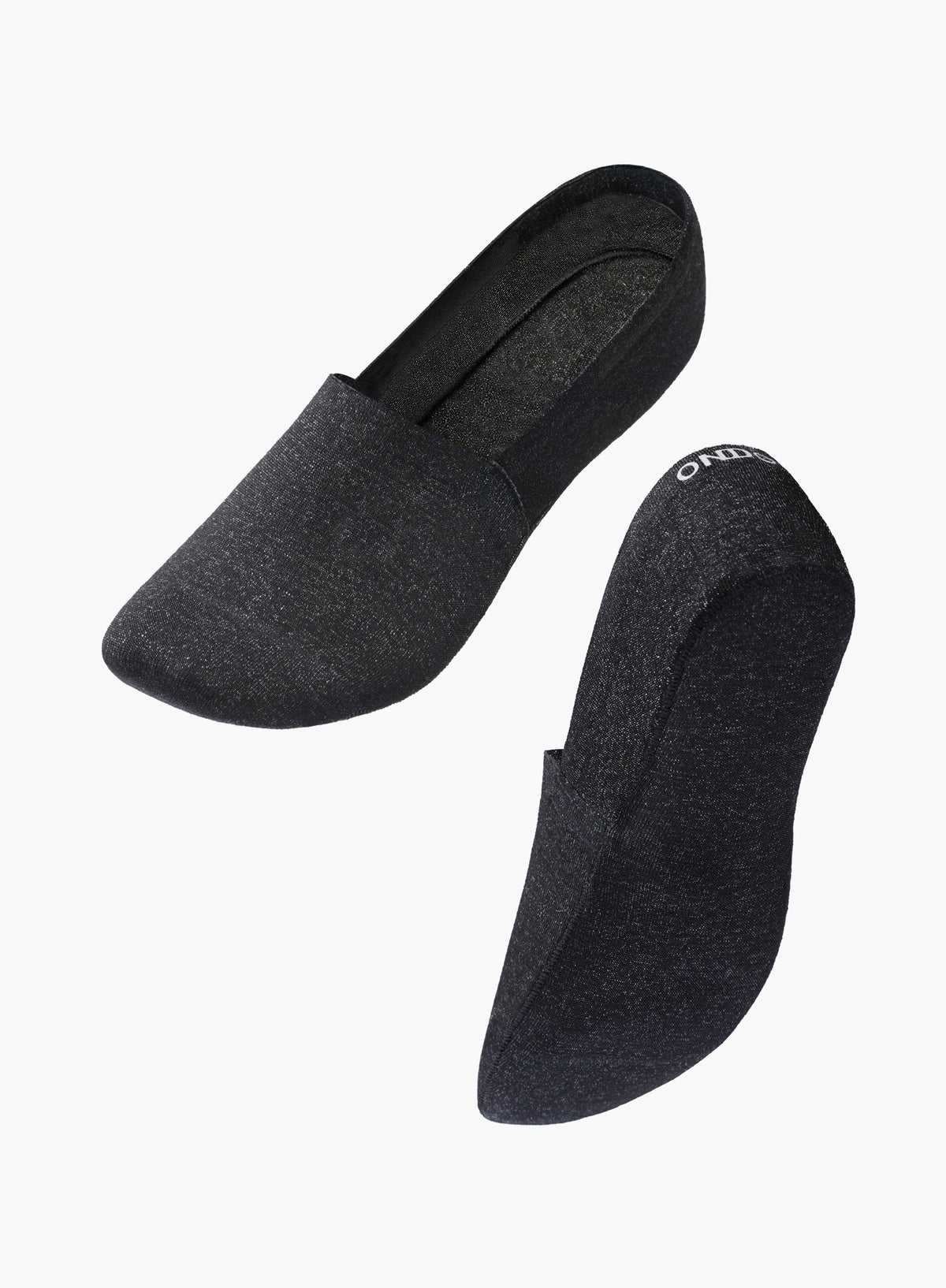
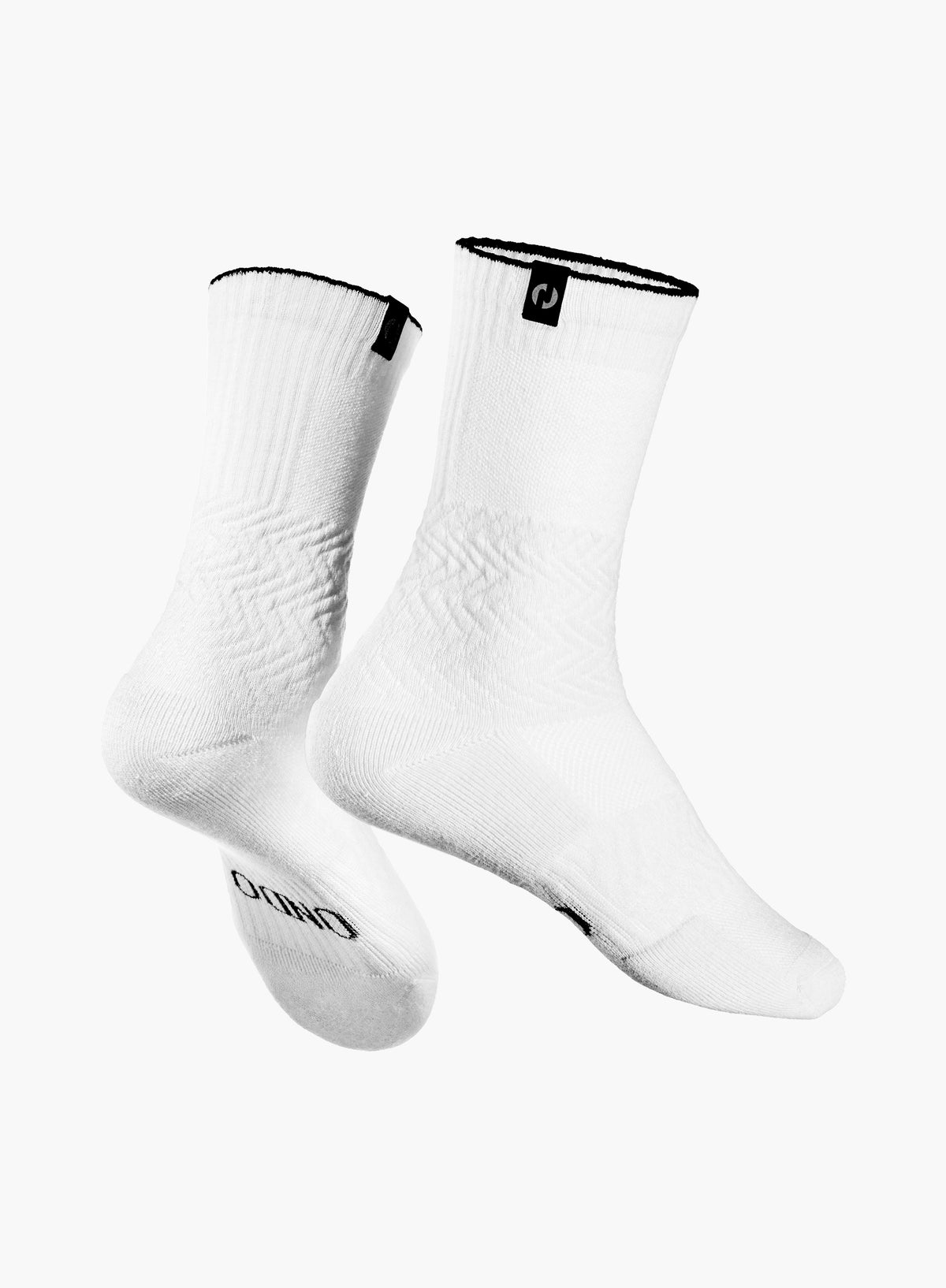
ONDO offers three concealed options and one visible crew style for different heel constructions. Low-Cut No Show Socks, Cotton No Show Socks, and Merino Wool No Show Socks work when the shoe opening conceals their edges. Contour Compression Crew Socks create a visible cuff when the shoe has enough interior space. Compare each profile with the shoe opening, then check the relevant size chart and test the fit during movement.

Common Sock Problems With Heels and How to Fix Them
Sock problems often result from a mismatch in cut, size, thickness, or shoe opening. Identify where the fabric shifts, gathers, or becomes visible, then adjust one factor at a time.
- The sock edge is visible: The cut sits too high for the shoe opening. Switch to a lower-cut no show sock or a half sock that remains behind the visible shoe line.
- The sock slips off the heel: Incorrect sizing, uneven placement, or a heel grip that does not lie flat can cause movement. Reposition the heel section and check the product size chart. For open-back shoes, use forefoot-only coverage.
- Fabric bunches around the toes: The sock may be too large, thick, or loose across the forefoot. Choose a thinner profile with a close, smooth fit around the toes.
- The shoes feel too tight: Excess fabric reduces the available interior space. Switch to a lightweight knit or a partial-coverage style that matches the shoe opening.
- Visible socks look accidental: Uneven cuffs or unrelated colors make the styling appear unplanned. Align both cuffs at the same height, then repeat the sock color or texture elsewhere in the outfit.
- Half socks shift: A loose forefoot fit allows the fabric to fold or move toward the toe opening. Check the size, smooth the material across the forefoot, and retest the combination when walking.
Wrap Up
Standard no show socks suit enclosed pumps, half socks work with many slingbacks and open-back heels, and visible ankle or crew socks make the cuff part of the outfit. Choose socks for high heel shoes according to the shoe opening, interior fit, and preferred visibility rather than heel height alone. Compare several cuts in the intended shoes before making the final choice.
Explore the ONDO socks collection to review low-cut and visible styles for different shoe openings.
FAQs on socks for heels
What are half socks for heels?
Do no show socks work with pumps?
Can I wear ankle socks with heels?
Can I wear socks with open-toe heels?
What are the best no show socks for high heels?
Do kitten heels need different socks?
Read more
Socks slip because of friction, poor fit, and worn-out elastic. Smooth shoe linings and moisture can make it easier for socks to slide during wear. If you're trying to figure out how to stop socks ...
The best socks for loafers depend on the shoe opening, occasion, fit, and whether you prefer a hidden or visible style. Standard no show socks suit loafers with greater coverage, low-cut liners fit...